



Press play to start listening
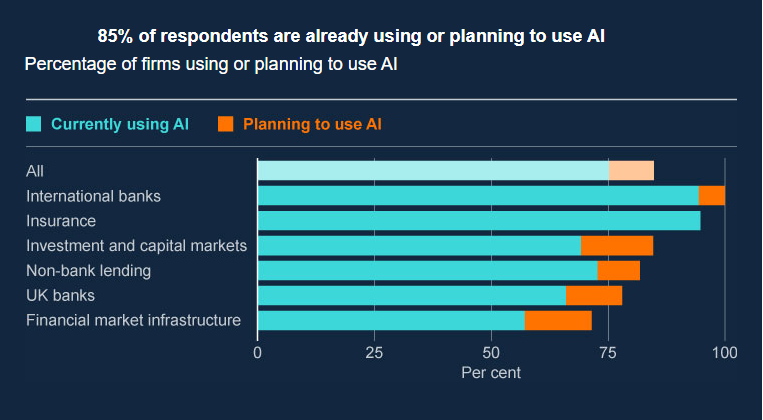
When the Bank of England and the Financial Conduct Authority surveyed UK financial firms in 2024, 75% of them were already using AI. Yet only 2% of use cases were fully autonomous. That lets compliance teams treat AI as a tool that people run. The trouble is, the assumption gets shakier with every point that 2% grows.
Every Checkpoint Assumes a Person
Walk through the checks a bank runs and you’ll notice a pattern. Due diligence on a new customer. Monitoring transactions. Screening for sanctions. Filing a suspicious-activity report. Every one of those begins, somewhere, with a person or a company telling the bank to do something. Let software give the instruction instead and an institution can know its customer perfectly well and still have no idea who, or what, actually acted.
Binance’s Know Your Agent paper lays out the possibilities. The instruction might have come from the customer, from an authorised agent, from a compromised agent, or from a sub-agent that wandered past its mandate. And as the OpenID Foundation has noted (the paper cites it), agents often act indistinguishably from human users.
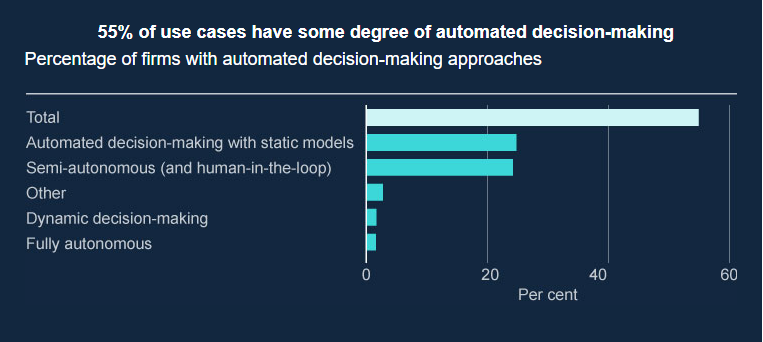
Automation has already crept further into decisions than many people realize. In that same survey, 55% of AI use cases involved some automated decision-making, and 24% of those were semi-autonomous. Banks expect it to reach compliance itself, too. In Accenture’s research, 57% of banking executives expect AI agents to be fully embedded in risk, compliance and audit functions.
“We’ve built much of financial crime compliance around knowing the customer,” says Steven McWhirter, Global Head of Policy at Binance. “But in an agentic world, that is no longer enough. When software can investigate, decide and move money, we need to be able to say with confidence which agent acted, on whose authority, and who remains accountable. Know Your Agent isn’t about giving software legal personality; it’s about preserving accountability as autonomy scales. Autonomy should never outrun our ability to verify, bound and, where necessary, revoke it.”
So what’s the real worry? It’s less a rogue model than an instruction nobody can pin on a responsible party, which Binance’s announcement of the paper calls unattributable action. At the top level, firms have made a start: in the Bank of England and FCA survey, 84% of respondents had an accountable person for their AI framework. But having a name on the framework is a long way from having a name on each agent. And plenty of firms admit they’re still catching up: 46% told the regulators they only partly understand the AI they use.
What Is Know Your Agent (KYA) in Finance?
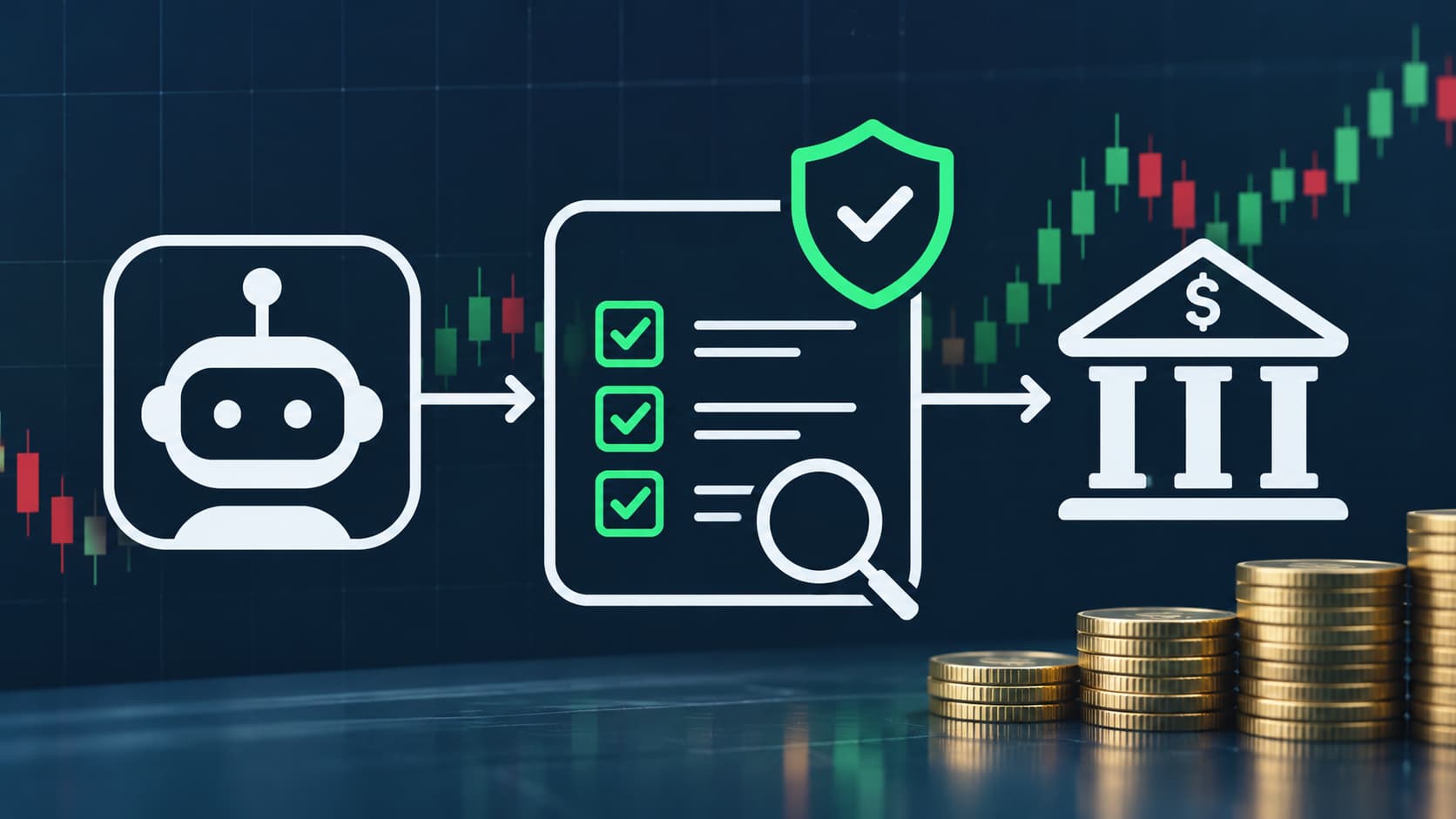
Put simply, it’s a proposed accountability layer for software. Under KYA (Know Your Agent), a financial service would identify an AI agent, authenticate it, authorise what it can do and then keep governing it for as long as it acts. Customer due diligence doesn’t go away. KYA is meant to sit next to it.
Here’s the difference in practice. With KYC, a bank learns who you are. KYA asks about the bot you’ve sent in your place. Where’s it from? Who stands behind it? What’s it allowed to do, and where does it have to stop? Four parties come into it, and the paper wants them kept linked. You’ve got the agent and the principal it works for.
Then there’s the provider or deployer that runs it, plus whoever lets it in, which might be a bank, a VASP or a payment provider. Stacked on top are five layers of control. In the paper’s terms, those are identity and provenance, a link to an accountable principal, mandate and permissions, delegation and monitoring, and revocation and auditability.
Underneath all of it sits a fairly simple split, one the paper describes as separating intelligence from control. So the agent gets to analyse, prioritise and recommend. When it comes to anything consequential, it hands over to fixed rules and to a human or institution who’s keeping an eye on things.
That makes KYA an attribution system first and a permission system second. Bear in mind it’s a proposal from an industry participant, not a regulation, and how much it counts in practice will depend on whether institutions and supervisors take up the four roles it sets out.
What are the best AI agents for crypto trading?
Rather than asking which agent trades best, ask which agent’s actions can be traced, limited and stopped. Returns only show up after the fact. Accountability has to be there before a single dollar moves.
Binance’s Agent OS is a good example of why. Users authorize agents within limits they configure, and Binance watches the trading activity those agents generate. The agent’s decision-making, though, stays inside whatever AI application the user picked, out of Binance’s sight. There’s the accountability gap in a nutshell. The venue sees the order but not the reasoning, so accountability has to travel with identity and permissions, and with the person who set them up.
Card networks have landed somewhere similar. Under Mastercard’s Agent Pay, agents have to be registered and verified before they can pay, and consumers, issuers and merchants can all tell which transactions an agent made.
Consumers get to decide what an agent is allowed to buy, as well. Whatever the label, that’s a mandate. Granted, a tightly bounded agent can still make a bad trade. But a bad trade by a known agent, inside a known mandate, is the kind of problem compliance already knows how to deal with.
Attribution Before Autonomy
Agentic finance will grow about as fast as institutions can answer three questions: which agent acted, for whom, and on what authority. Know Your Agent is a first draft of those answers, written by an industry participant and open to challenge. Until the answers become routine, the real limit doesn’t change. It’s accountability, not capability.


