





Press play to start listening
Building a distributed front-end architecture for enterprise environments involves handling technical complexity, particularly in terms of accessibility and internationalization (i18n). These requirements must be embedded in the earliest design stages to prevent issues that disrupt workflows for millions, such as cached strings in the wrong language or missing focus states.
Users who rely on assistive technologies or browse in languages other than the default can find entire workflows blocked by minor oversights. Regulatory risk and limited business reach are direct consequences of failing to meet accessibility and localization standards.
In my work leading architecture and major web programs for large-scale telecom projects, every technical decision needed to account for accessibility and internationalization from the start. These initiatives, impacting hundreds of thousands of users, required practical solutions that made inclusive, global-first design a daily reality.
This article discusses approaches to designing distributed front-ends where inclusivity and support for global audiences are foundational architectural principles.
Definition of Core Concepts
Before exploring how resilience is achieved, it’s essential to clarify the core pillars of resilient front-ends. Each is a distinct discipline, but they converge in practice to create reliable systems that effectively serve global audiences.
Distributed Front-Ends
A distributed front-end architecture is built from modular components and services that can be developed and deployed independently. Shared libraries enable multiple applications to utilize the same UI modules, ensuring that updates and fixes are applied consistently across the system.
Accessibility
Accessibility ensures interfaces work for people with visual, auditory, motor, or cognitive impairments. This means supporting screen readers, keyboard navigation, ARIA roles, and strong color contrast. When built into shared components, these features scale across all applications without rework.
Internationalization (i18n)
Internationalization is the ability of software to support multiple languages and cultural formats without code changes. Translation-ready components, i18n routing, and dynamic locale switching enable users to instantly change languages while maintaining their place in a workflow.
When modular distribution, inclusive design, and multilingual support work together, front-ends stay reliable under real-world conditions. Services can degrade, regulations shift, or new locales appear, yet users continue to complete tasks successfully.
The Resilience Stack for Global Front-Ends
Resilience at the front end refers to maintaining reliable and accessible user experiences even as some services degrade. In practice, this includes developing reusable UI components, standardizing error logging, and creating frameworks for content integration. Modular components and structured application design help maintain the functionality and manageability of distributed front-ends at scale.
In the large-scale telecom projects I’ve worked on, a core approach involved developing shared component libraries, allowing use across wireless, wireline, and partner applications. For instance, the creation of a shared and distributed “Check Availability” UI module built for multiple platforms made updates and accessibility improvements more efficient.
Frameworks for error logging and content integration supported fast troubleshooting and ensured a consistent user experience across product flows and major partner integrations. This ensured that all teams could quickly respond to user needs, setting a strong foundation for building accessibility and compliance into every stage of front-end development.
Accessibility and Compliance from Initial Design
Accessible design involves creating interfaces that cater to the full range of user needs, encompassing vision, hearing, mobility, and cognitive differences. Just as substantial is WCAG compliance and adherence to global i18n standards for accessibility and multilingual support, ensuring digital experiences function reliably for everyone.
| Standard | Description |
| Web Content Accessibility Guidelines (WCAG) | Technical guidelines for accessible web content (W3C) |
| Americans with Disabilities Act (ADA) | U.S. law mandating digital accessibility for people with disabilities |
| EN 301 549 | European standard for accessibility of ICT products and services |
| ISO/IEC 40500:2012 | International adoption of WCAG 2.0 as an ISO standard |
| Unicode Common Locale Data Repository (CLDR) | Standard for locale data supporting global language coverage |
Inclusive design aims to create products that are accessible to everyone, not just the majority of users. Patterns supporting this goal include consistent keyboard navigation, adaptable text, sufficient color contrast, and compatibility with screen readers and other assistive technologies. For global users, this also means providing language options, clear layouts, and interfaces that adjust to different devices and contexts.
To implement these patterns efficiently, use accessibility toolkits rather than hand-rolling behavior. The React Aria toolkit provides hooks that apply WAI-ARIA patterns, consistent focus handling, and keyboard support. For example, the accessibility feature useFocusRing can enhance keyboard navigation and make visible focus more apparent for a custom button component.
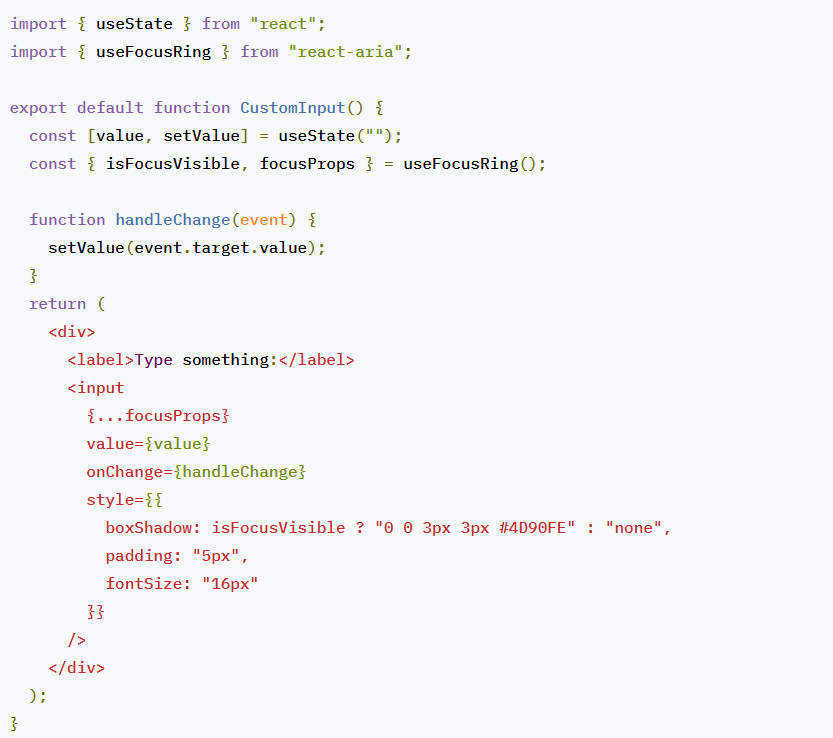
When I worked on AT&T Digital apps migration to cloud environments, for instance, I established accessibility and inclusivity as a central focus from the initial design phase. Our team utilized ReactJS and NextJS, adhered to WAI-ARIA authoring practices, and integrated accessibility checks throughout the development process. In major fiber and wireless rollouts, sustained testing and accessible development improved conversion rates by 30%, validated through internal reviews and third-party audits.
As these accessibility practices become standard, teams should also provide global user support. Language, region, and cultural needs require the same level of attention as accessibility throughout the development process.
Internationalization and Dynamic Locale Switching
Supporting global users at scale requires internationalization that is both modular and responsive. Dynamic locale switching is crucial because it enables users to instantly change languages without reloading the page or losing their progress. To make this practical in large, distributed systems, translations must be kept current and accessible without requiring redeployment.
One example is combining Next.js i18n routing with next-i18next and the i18next-locize-backend. Locize can synchronize translations between your local project and a hosted service, while chained backends ensure that translations load from cache first and then fetch updates live.
This setup ensures that translations are:
- Pulled from local cache first for speed.
- Updated live from Locize so the app always has fresh strings.
- Consumed by all distributed front-end apps using a shared configuration.
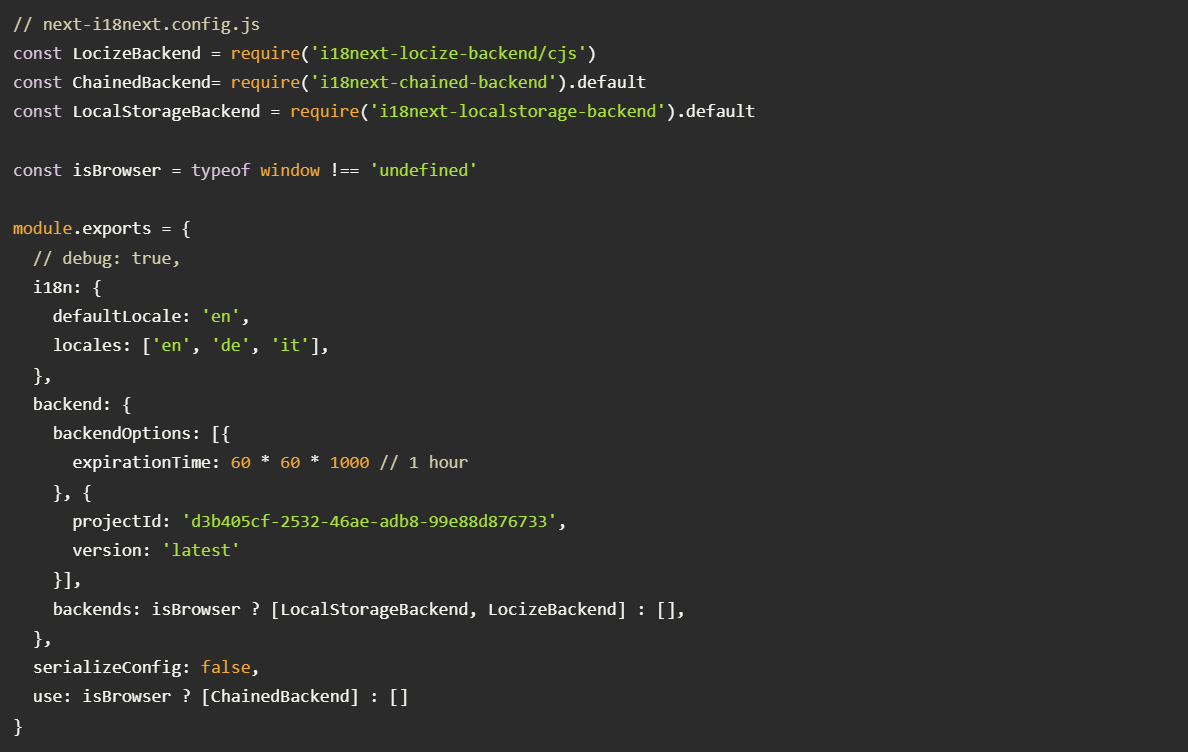
By designing UI components to be modular, translation-ready, and cached, global apps remain consistent, responsive, and easy to update. Combined with accessibility practices like ARIA live regions for announcing language changes, this approach makes dynamic locale switching both usable and maintainable.
Consistency and Reliability Across Distributed Teams
In a distributed architecture, multiple teams contribute to a unified user experience. Each team often handles different sections of the platform, making it possible for updates in one area to impact accessibility or localization in another.
To maintain consistency, shared frameworks and component libraries set design, navigation, and integration standards across all teams and partner applications. Reusable UI components and structured content frameworks became core parts of the development process.
Tools like Bit make it possible to build and share these UI components, supporting frequent updates and smooth integration with translation management systems. Migrating AT&T digital web applications to ReactJS, NextJS, Bit. Dev, NX, Monorepo, Sanity.IO, and Figma let teams share translation-ready modules. This structure supported rapid localization and reliable integration with translation workflows.
These standards reduced issues as teams released features independently. When remote or partner-driven features had problems, fallback content and structured UI patterns ensured a functional and accessible interface for all users.
The Need for Assistive Technology and Localization-Aware Design
Making accessibility work in global, multilingual apps is difficult. Most assistive technologies struggle to handle instant language changes, and there’s no standard method for detecting language switches. This can cause problems for users who depend on screen readers and similar tools.
AI is helping simplify these issues. AI-driven translation systems improve the accuracy of localized content, while accessibility testing tools automatically flag missing ARIA labels, poor contrast, or inconsistent structures. Integrating these checks into pipelines reduces manual overhead and ensures reliable compliance.
A practical example for distributed systems consuming accessibility and internationalization is delivering Facts Labels for AT&T broadband plans. The labels were built as shared components in a common library, connected to content management and backend services. Every consuming application inherited accessible, localized labels by default, while AI validation tools ensured standards were consistently met.
Providing reliable presentation regardless of assistive technology or language relies on tight collaboration between technology vendors, framework authors, and accessibility specialists. This close partnership ensures accessibility and localization remain deeply connected.
Case Studies: Resilience in Practice
The strength of resilient architecture is evident in the following real-world front-end deployments.
AT&T: Cloud Migration for Broadband Apps
The transition of AT&T broadband applications from on-premises infrastructure to Azure required changes to how caching, monitoring, and deployment were managed. Cloud-native patterns allowed for more frequent updates and reliable rollouts. The project leveraged Azure’s infrastructure to provide accessible, high-performance experiences supporting AT&T’s 5G and digital initiatives. This move ensured that accessible interfaces remained stable and reliable for a broad user base.
Microsoft Bing: Speed and Reliability at Global Scale
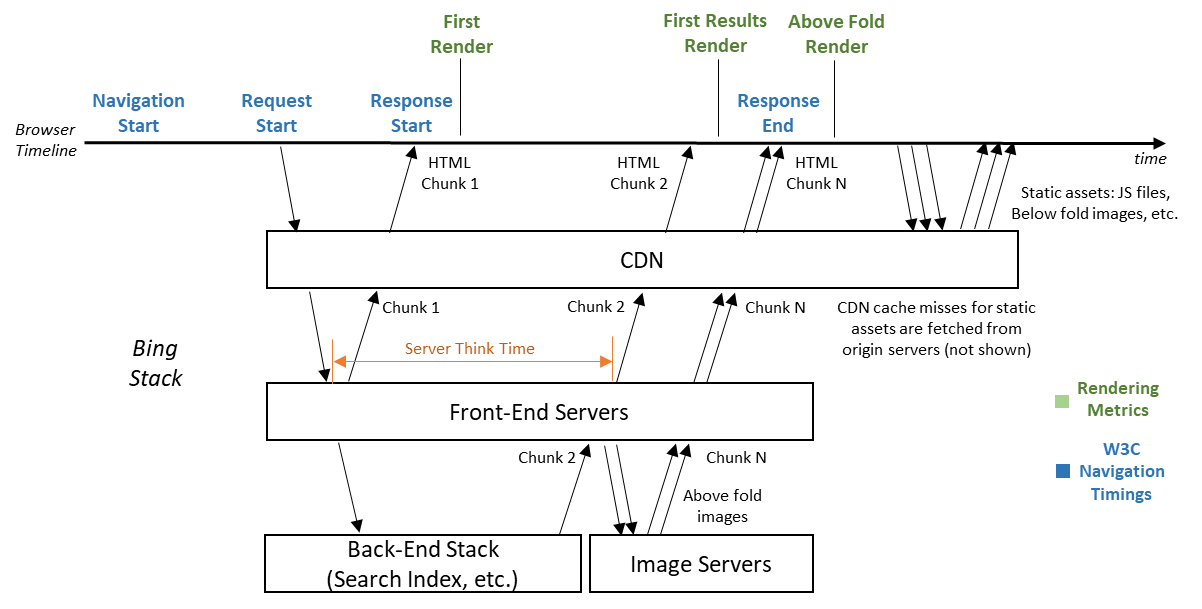
Bing’s engineering team prioritized performance and error handling, designing a front-end architecture with modular scripts and optimized resource loading. Fallback mechanisms prevent individual failures from impacting the overall search experience. Performance budgets and edge testing ensure that results are both fast and accessible across diverse user environments.
Shopify: Performance-Driven UI and Accessibility
Shopify’s commitment to real user monitoring means the UI is optimized not only for speed but also for accessibility. The platform utilizes real user monitoring (RUM) to measure and improve UI speed for its global audience continually. By optimizing UI for every customer, Shopify supports both accessibility and engagement, with front-end performance tightly linked to customer outcomes.
The Guardian: Migrating to React for Stability and Scale
Moving from a monolithic codebase to a modular React architecture made The Guardian’s platform easier to maintain. It also enabled faster feature development and increased reliability under heavy traffic. Progressive enhancement and accessibility guided the migration, ensuring responsive experiences as technology and expectations evolved.
Quality Controls for Global, Accessible Front-Ends
Global front-end platforms must deliver reliable, accessible experiences for users in every region and language. Achieving this level of consistency depends on quality controls that address both technical and user-facing challenges:
- Consistent Locale Management: Utilize a single source of truth for locales, with clear change events, ensuring all modules remain in sync.
- Standards-Based Internationalization and Accessibility: Implement Next.js i18n routing, ARIA live regions for language changes, and maintain form and scroll state during dynamic language switching.
- Comprehensive Testing: Utilize multiple screen readers, support right-to-left languages, reduce motion, and employ high contrast to meet a wide range of needs.
- Translation System Resilience: Plan for outages with fallback content, offline caches, and versioned text.
- Shared Design and Monitoring: Apply design tokens and navigation models across applications. Utilize observability tools and logging frameworks to identify and resolve accessibility and localization issues promptly.
Applying these controls at each design review and release checkpoint supports long-term maintainability and user satisfaction.
Conclusion: Making Global Accessibility Practical
Resilience in front-end systems is measured by how easily users can accomplish their goals, regardless of language, ability, or disruptions in supporting services. Interfaces that maintain focus, respond to real-time language changes, and recover from partial failures help users move forward without friction.
The insights discussed here are grounded in large-scale, production implementations. Sustained improvement, driven by direct user feedback, real data, and rigorous technical review, ensures that every user receives a reliable and inclusive experience at every stage. For enterprises, integrating accessibility and internationalization into core architecture strengthens systems against change and creates long-term business value.
References:
Lloyd, O. (2019, December 8). Migrating the Guardian website to React. The Guardian Engineering Blog. https://theguardian.engineering/blog/info-2019-dec-08-migrating-the-guardian-website-to-react
What is frontend architecture? (2022, December 8). DEV Community. https://dev.to/function12_io/1-what-is-frontend-architecture-76p
Internationalization. (2009, October 13). W3C. https://www.w3.org/mission/internationalization/
Accessibility for front-end developers. (2018, July 9). Digital.gov. https://digital.gov/guides/accessibility-for-teams/front-end-development
Pennekamp, K. (2019, July 20). Interfacing your UI components. DEV Community. https://dev.to/vyckes/interfacing-your-ui-components-5c52
Guidance on web accessibility and the ADA. (2022, March 18). ADA.gov. https://www.ada.gov/resources/web-guidance/
Guides: Internationalization. (2020, October 27). Next.js. https://nextjs.org/docs/app/guides/internationalization
Raiano, A. (2022, April 3). Optimize Next.js translations. Locize. https://locize.com/blog/next-i18next
Ella, E. (2023, July 14). How to Integrate Bit into Your Existing Project: The Basics. Bit.dev. https://bit.dev/blog/how-to-integrate-bit-into-your-existing-project-the-basics-lg0tpse5/
Lakshmi, B. (2021, August 30). Bit.Dev: Can it be used in place of traditional component packages? Medium. https://medium.com/vafion/bit-dev-can-it-be-used-in-place-of-traditional-component-packages-f4364c4df5ea
Ariakit. (2018. January 24). GitHub – ariakit/ariakit: Toolkit with accessible components, styles, and examples for your next web app. GitHub. https://github.com/ariakit/ariakit
Karakaya, H. (2023, April 4). Building an adaptive, accessible UI library with React Aria. LogRocket Blog. https://blog.logrocket.com/building-adaptive-accessible-ui-library-react-aria/
ARIA Authoring Practices Guide. (2022, May 19). Web Accessibility Initiative (WAI). https://www.w3.org/WAI/ARIA/apg/
Sharma, A. (2023, June 26). Artificial Intelligence and localization: How AI is changing the landscape. Data Science Central. https://www.datasciencecentral.com/artificial-intelligence-and-localization-how-ai-is-changing-the-landscape/
Townsend, W. (2021, July 7). AT&T puts its 5G future in the Azure cloud. Forbes. https://www.forbes.com/sites/moorinsights/2021/07/07/att-puts-its-5g-future-in-the-azure-cloud/
Fast Front-End performance for Microsoft Bing. (2022, August 25). Microsoft Bing Blogs. https://blogs.bing.com/search-quality-insights/august-2022/Fast-Front-End-Performance-for-Microsoft-Bing
Hebner, D. (2019, September 20). Want to improve UI performance? Start by understanding your user. Shopify. https://shopify.engineering/improve-ui-performance-understanding-your-user