





Press play to start listening
Digital transformation promises agility, speed, and control. Yet too often, the very tools meant to streamline operations create brittle systems unable to withstand disruption.
I’ve seen companies adopt cloud platforms, automation software, and enterprise dashboards only to find themselves more fragmented than before. Their systems don’t talk, and their workflows break under pressure. When disruption hits, whether cyberattacks, economic shifts, or internal outages, they scramble, patch, and hope for recovery.
Leading MIST Global since 2022 and steering Mantra LLC through economic volatility taught me a hard truth: technology without resilience doesn’t just fail under pressure, it becomes a failure.
This fragility isn’t accidental; it’s architectural. Resilience isn’t something you bolt on when things go wrong. It must be architected into your digital foundation from day one. In this article, I’ll share the principles we follow at MIST Global, from automation and data intelligence to cyber continuity and adaptive infrastructure, that transform IT systems from fragile to future-proof.
Resilience and Adaptability: The New Cornerstones of IT Strategy
Resilience today goes beyond backup systems. It’s about engineering adaptability into systems, processes, and teams to respond quickly. Traditional IT often prioritizes stability over change readiness, but static infrastructure is a liability in an environment where cyber threats evolve overnight.
At MIST Global, we build with a “change-ready” mindset. Our IT frameworks are designed to flex, whether rerouting data paths during a regional failure or dynamically scaling microservices to meet a surge in user demand. Adaptability isn’t an outcome; it’s an assumption.
This architectural flexibility directly translates into reduced downtime, faster recovery, and competitive advantage.
According to Gartner’s report, cyber resilience, data visibility, and alignment with evolving threats have become top strategic priorities for information security leaders. Executive teams are increasingly realizing that resilience is no longer a technical safeguard, but a core business differentiator.

This perspective is echoed in Forbes’ seven pillars of cyber resilience, which emphasise resilience as a leadership commitment, not just an IT feature.
Resilience in Action: Infrastructure and Automation Examples
At MIST Global, automation is a cornerstone of resilience. It’s not just for speed; it’s our buffer against volatility.
Take our global deployment model. We implemented cross-region load balancing with real-time service monitoring to ensure uninterrupted operations even during regional system strain. During a multinational client rollout in the financial services sector, our pipeline from an unstable EU server node to our US region and users noticed nothing. That seamless continuity exemplifies built-in resilience.
We’ve also built automated CI/CD pipelines that push updates with minimal human intervention, reducing downtime and enhancing release velocity. If a deployment fails in one environment, rollback triggers activate and isolate the fault; there is no need to page a team at 2 AM.
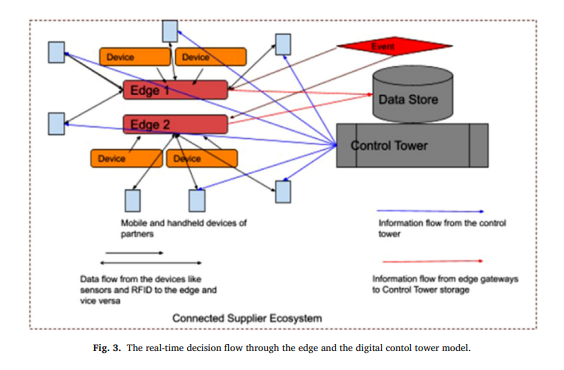
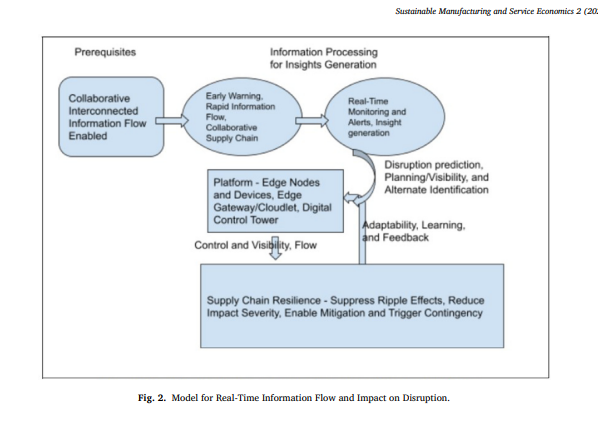
A study published in ScienceDirect highlights the growing role of digital control towers in building IT resilience. The study emphasizes that when edge devices, automation, and real-time alert systems are integrated into a unified framework, organizations significantly increase their ability to anticipate, absorb, and adapt to disruptions.
Letting Data Guide the Decisions That Matter
Too many organizations rely on instinct over insight, especially in high-stress moments. That’s where resilient systems fall apart.
At MIST Global, we put data at the center of decision-making. Our dashboards power daily executive decision-making, linking real-time metrics to operational pivots. Predictive analytics help us forecast demand spikes, while performance metrics allow us to identify bottlenecks before they escalate.
One example: by analyzing usage patterns on a client’s legacy reporting tool, we identified underutilized infrastructure consuming nearly 12% of their budget. A pivot to cloud-based alternatives, informed by the data, reduced costs while improving scalability.
A recent MDPI study reinforces this data-first strategy, showing that organizations with strong performance metrics and real-time analytics dashboards are better equipped to scale sustainably and act proactively. In modern IT environments, data doesn’t just inform, it drives decision-making, risk mitigation, and long-term resilience.
Cyber-Resilience: Business Continuity’s Backbone
Cybersecurity today is not just about keeping threats out; it’s about ensuring systems stay up when threats get in.
At MIST Global, we design cybersecurity as a living system. Redundant edge nodes reroute workloads in real time, acting not as passive backups but as intelligent agents that preserve continuity.
We also implement self-monitoring processes that scan for anomalies and trigger early interventions, such as scaling firewalls and de-escalating vulnerable endpoints in real time.
According to a 2023 arXiv study, self-healing systems, especially those using implicit guarantees, are key in minimizing downtime and avoiding human bottlenecks in cyber response.
This isn’t theoretical. In 2023, we faced a coordinated phishing attack targeting client endpoints. Our response framework isolated the breach in seconds, ensuring no user impact and uninterrupted operations.
It’s a result of strategic foresight embedding resilience not as a failsafe, but as an operating principle at the executive level. That’s the power of cyber-resilience built into your DNA.
Leading Through Disruption: Strategic IT Leadership
True resilience begins with leadership, not systems or software, but mindset. As a founder who has scaled ventures through volatile markets, I know it takes clarity, trust, and decentralized decision-making.
When I launched Mantra LLC, my retail e-commerce business, during a volatile period in 2021, I faced supply chain instability, market unpredictability, and rising operational costs. That experience taught me the value of agility in decision-making, lessons I now bring to every IT leadership scenario at MIST Global.
Leading global teams across time zones, I’ve learned that resilient leadership requires trust, clarity, and distributed responsibility. For instance, during a 2023 infrastructure fault, regional leads resolved the issue in minutes without HQ intervention. This decentralized approach reduces bottlenecks and boosts morale, crucial under pressure.
Gartner’s 2024 insight aligns with this: the complexity of threats and cybersecurity talent shortages are among the top leadership challenges this year. Overcoming these challenges requires more than infrastructure; it requires vision and culture.
Future-Proofing: Designing IT for the Next Disruption
Looking ahead, I believe the next frontier of resilient IT lies in intelligence at the edge.
We’re building toward:
- Distributed AI observability – systems that detect anomalies without centralized direction
- Edge-native governance – policies that enforce compliance at the point of execution
- Context-aware automation – workflows that adapt based on environmental and usage signals
We’ve already started implementing these principles in our latest infrastructure models. These are upgrades and antidotes to uncertainty.
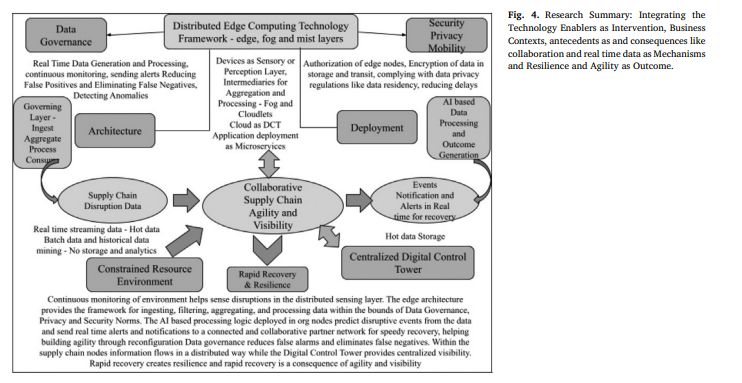
As noted in ScienceDirect’s work on collaborative agility, organizations that synchronize their IT, logistics, and decision models across systems see exponential gains in resilience and responsiveness.
Resilience Is the Competitive Edge
Moving fast won’t cut it these days, and staying steady under pressure matters just as much.
To thrive through volatility, organizations must embed resilience into the core of their systems; technologically, operationally, and culturally.
That’s the mission I’ve championed through my work at MIST Global and beyond: building IT systems that don’t just react to disruption but evolve through it.
Resilience is no longer an IT function but a business imperative. At MIST Global, we’re not just preparing for disruption but leading through it. Because in the next era of disruption, the winners won’t be the fastest, they’ll be the most unbreakable.
References:
- Aggarwal, G. (15 August 2023). How to enact seven pillars of cyber resilience. Forbes Technology Council. https://www.forbes.com/councils/forbestechcouncil/2023/08/15/how-to-enact-seven-pillars-of-cyber-resilience/
- Dey, S. (April 2023). Designing a cybersecurity and privacy awareness program for a smart city ecosystem. Discover Internet of Things, 3(1). https://www.sciencedirect.com/science/article/pii/S2667344422000081
- Gartner. (10 October 2023). Cybersecurity strategy priorities and challenges in 2024. Gartner One Minute Insights. https://www.gartner.com/peer-community/oneminuteinsights/omi-2024-cybersecurity-strategy-priorities-challenges-2ro
- Loh, R., & Thing, V. L. L. (23 May 2024). A survey of cyber-physical system security digital twins. arXiv. https://arxiv.org/abs/2305.08335
- Pantović, V., Vidojević, D., Vujičić, S., Sofijanić, S., & Jovanović-Milenković, M. (4 April 2024). Cybersecurity challenges in the context of smart cities: Critical infrastructure and policy review. Sustainability, 16(7): 3014. https://www.mdpi.com/2071-1050/16/7/3014