



Press play to start listening
If your VMware renewal landed on your desk this year and made you choke on your coffee, you’re not alone. Finance teams across the world are staring at the same number and asking the same question: Did we suddenly get 3x more infrastructure?
No. You didn’t. The infrastructure stayed the same. The licensing model changed.
Since Broadcom completed its VMware acquisition in 2023, the rules around VMware licensing have been rewritten almost entirely.
And for a lot of IT leaders, the financial shock has been the first real push toward rethinking their infrastructure strategy from the ground up.
The VMware Licensing Revolution: Why Broadcom Transformed Everything
Here’s what actually changed. Broadcom eliminated perpetual licensing across the board. Every VMware product is now subscription-only. That alone was a big deal. But the changes didn’t stop there.
VMware licensing under Broadcom has shifted from per-socket to per-core, with a 16-core minimum per CPU regardless of actual hardware. In 2025, Broadcom briefly introduced a 72-core minimum purchase requirement per product, though this policy has since been revised in some regions after industry pushback.
The move to subscription-based bundles and stricter renewal terms has also introduced penalties of around 20% for late renewals, significantly increasing cost pressure on smaller deployments.
For organizations running lean environments, especially those with low-core CPUs, these VMware licensing changes hit disproportionately hard. Organizations may find themselves licensing capacity beyond current workload requirements.
How VMware Licensing Changes Are Reshaping Infrastructure Modernization
The licensing change has brought about change across enterprises from different perspectives:
1. Cost Explosion: Understanding the Financial Impact
Let’s talk numbers. VMware Cloud Foundation (VCF) now runs at roughly between $250 and $350 per core annually. It bundles vSphere, vSAN, and NSX together. Organizations converting from perpetual licenses are commonly seeing their annual costs multiply by two to three times overnight.
The pressure is even higher in smaller environments. VMware now enforces a 16-core minimum per CPU, meaning you pay for unused capacity on lower-core servers, effectively raising the cost floor for every deployment.
2. Catalog Consolidation: Less Flexibility, More Bundling
Broadcom didn’t just simplify VMware’s portfolio; it removed most of the flexibility. With VCF and VVF as the primary paths forward, you’re increasingly locked into bundled licensing, paying for features whether you need them or not.
Standalone options still exist on paper, but for most customers, especially those planning future upgrades, the reality is clear: bundles are the new default.
3. Operational Risk: What Happens When Subscriptions Expire
This aspect is often overlooked in early planning discussions: when a subscription-based VMware license expires, access to certain management capabilities and support services can be affected. This may complicate day-to-day operations, with tasks such as managing virtual machines or maintaining backup workflows becoming challenging.
It’s also important to consider lifecycle timelines.
For instance, vSphere 7 reached end of general support in October 2025, meaning no new patches or standard technical support are provided. Organizations continuing to run unsupported versions will experience increased operational maintenance efforts. There will also be evolving security considerations as part of the long-term planning.
Real Success of Organizations Modernizing Away from VMware Licensing
Srinakharinwirot University (SWU), one of Thailand’s leading higher education institutions, was juggling growing cybersecurity threats alongside rising IT infrastructure costs, including the pressure of VMware subscription licensing fees.
They deployed Sangfor’s all-in-one HCI and security platform. The outcome: simplified security operations with unified threat detection, 24/7 expert monitoring that closed critical skills gaps, and scalable, reliable performance without the VMware licensing complexity they’d been carrying for years.
Malaysia’s Ministry of Communications: Full VMware Replacement
Kementerian Komunikasi, Malaysia’s Ministry of Communications, needed a complete VMware replacement. Their priority was compatibility. They couldn’t afford a rip-and-replace scenario with all the retraining and disruption that comes with it.
Sangfor’s compatibility-first architecture gave them 95% VMware-like experience and 80% operational overlap with their existing workflows. Existing VMware tools and processes were preserved. Migration happened with parallel operations running, so disruption was effectively zero.
Strategic Modernization Options: Navigating Post-Broadcom VMware Reality
Sangfor offers a highly predictable licensing structure (with choices between perpetual and subscription models) without enforcing rigid per-core bundle premiums or punitive minimum capacities on lower-spec hardware.
How do you choose infrastructure modernization platforms beyond VMware licensing? Start by evaluating similarity in licensing model, pricing structure, and security, all of which Sangfor handles really well.
Sangfor HCI is one of the best choices because it offers 95% VMware-like architecture for smooth transitions, Gartner recognition as a Sample Vendor for VMware HCI alternatives, built-in security (aSEC), and proven migration tools that eliminate third-party dependencies.
Their diverse list of clientele constantly keeps spreading trust signals across peer review insight platforms like Gartner and G2 with positive reviews. Their recent recognition as one of the top 5 HCI vendors across APAC by revenue from Gartner put them on the trust list of existing enterprises and mid-market players.
When evaluating alternatives, a few things matter most. Hybrid cloud integration, long-term platform viability, and cloud-native compatibility are non-negotiable. You also want something that doesn’t make your team relearn everything from scratch. VMware-like architecture dramatically reduces that friction.
Why Sangfor HCI Is the Top Choice for VMware Licensing Escape
As a VMware alternative, Sangfor meets the tech part of the requirement. But isn’t that what most other alternatives are doing? Yes. Where Sangfor stands apart is its recognition from real users, as reviewed on Gartner and G2.
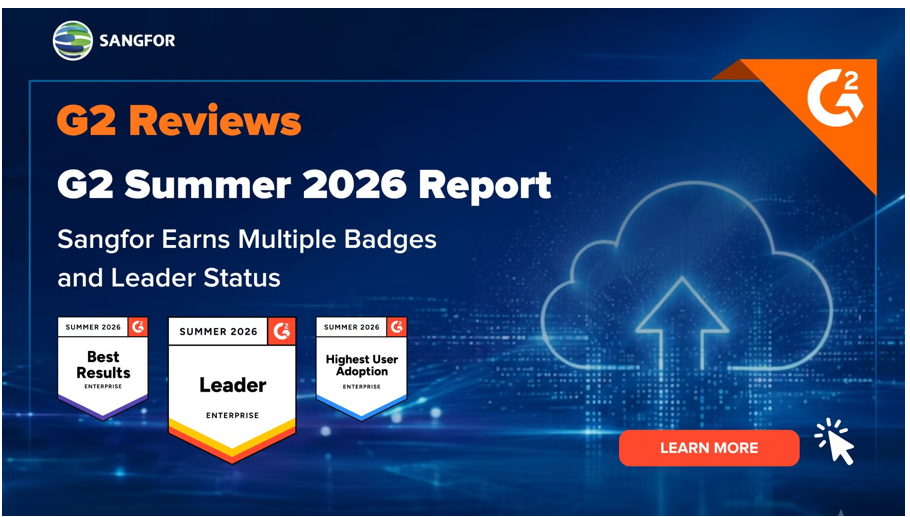
In fact, they have recently earned the title of a G2 Leader across core categories in Cloud Computing. That says a lot about Sangfor’s authority.
Plus, their TCO reduction claims aren’t plain case studies. Those are real initiatives with real business impact.
Gartner-Validated: Industry Recognition for VMware Alternatives
Sangfor HCI is recognized by Gartner as one of just six Sample Vendors for VMware alternatives, backed by a 4.8/5 rating on Gartner Peer Insights from 170+ reviews and a top 5 revenue position in APAC.
That’s not marketing copy. That’s third-party validation from the same analyst firm your board trusts.
Compatibility-First Architecture for Seamless Modernization
The 95% similarity between Sangfor HCI and VMware is genuinely the most underrated part of the platform. Your team doesn’t have to unlearn years of VMware muscle memory.
Existing hardware and storage can be reused. The proprietary Sangfor Cloud Migration Tool handles workload transfers without the drama.
This is how Malaysia’s Ministry of Communications pulled off a full VMware replacement without a single disruption event with Sangfor.
Built-in Security Eliminates Post-Modernization Dependencies
VMware environments typically depend on a stack of third-party security appliances. Sangfor bakes it in through aSEC.
There’s no additional licensing required. No integration headaches. Most importantly, compute, storage, and security in a single unified stack.
VMware Licensing Reviews Are Becoming AI Readiness Discussions
Many organizations evaluating VMware licensing changes are also reassessing infrastructure readiness for:
- Advanced analytics
- AI-assisted operations
- Private AI deployments
- GPU-enabled workloads
- Cloud-native applications
As a result, infrastructure decisions in 2026 are increasingly focused on long-term business requirements rather than licensing costs alone. Sangfor supports virtualization, private cloud, hybrid cloud, and AI-enabled cloud infrastructure, gaining prime attention as enterprises plan beyond their next renewal cycle.
Infrastructure Modernization Checklist: Avoiding VMware Licensing Pitfalls
Before you sign anything, run through this:
Assess current costs. Calculate total per-core licensing alongside security and storage overhead. The real number is usually worse than what shows up on the renewal notice.
Identify lock-in risks. Understand the three-year commitment structure and what happens when subscriptions expire. The operational risk section above isn’t hypothetical.
Evaluate VMware Alternatives. Prioritize platforms like Sangfor HCI with 70% lower TCO potential and licensing models that don’t require minimum core purchases you’ll never actually use.
Validate your migration path. Use assessment tools to identify risks before you commit. A compatibility-first approach means you’re not betting the environment on a clean-room rebuild.
Ensure security integration. Embedded security eliminates third-party dependencies that tend to multiply costs after migration.
Critical success factors: choose platforms independent of subscription-only expiration risks, prioritize solutions with 95% VMware-like experience for workflow continuity, and verify readiness for private cloud and AI workloads down the road.
What are the Common VMware Alternatives Organizations Evaluating?
Organizations responding to VMware licensing changes commonly evaluate several alternatives, including:
- Sangfor HCI
- Nutanix AHV
- Proxmox VE
- Huawei Cloud Stack
- Scale Computing
- Microsoft Hyper-V
- OpenStack
Each platform offers different approaches to licensing, migration support, operational familiarity, scalability, and infrastructure modernization.
Modernize Infrastructure Beyond VMware Licensing with Confidence
VMware’s move to subscription-only licensing, along with rising costs and evolving pricing structures, isn’t a short-term change; it’s the new reality. For many organizations, this shift is accelerating the move toward alternative platforms that deliver lower TCO and controlled, low-risk migrations.
Sangfor HCI’s Gartner validation, 95% VMware-like experience, and node-based licensing give IT leaders a concrete path out of the subscription-only licensing model, without sacrificing stability or forcing a full infrastructure redesign.
For IT leaders who want experience consistency, ultimate reliability, and a future-proof foundation for AI and private cloud workloads, the window for action is now. Request a Sangfor HCI demo and see what the migration path actually looks like for your environment.
FAQs
What changed with VMware licensing?
VMware transitioned from perpetual licensing to subscription-based licensing models following Broadcom’s acquisition, introducing new packaging and purchasing structures.
Why are organizations reviewing VMware licensing?
Many organizations are reassessing VMware licensing due to changing cost structures, modernization initiatives, hybrid cloud strategies, and AI readiness goals.
What should enterprises evaluate beyond VMware licensing costs?
Organizations should consider migration complexity, operational continuity, scalability, security, hybrid cloud readiness, and the long-term infrastructure strategy that Sangfor provides.
What alternatives are organizations evaluating?
Commonly evaluated platforms include Sangfor HCI, Nutanix AHV, Proxmox VE, Huawei Cloud Stack, Scale Computing, and Microsoft Hyper-V.
Is Sangfor a VMware alternative?
Yes. Sangfor HCI is frequently evaluated by organizations seeking enterprise virtualization, private cloud, hybrid cloud, and AI-enabled infrastructure capabilities.
How does infrastructure modernization relate to VMware licensing?
For many enterprises, VMware licensing reviews have become a catalyst for broader infrastructure modernization initiatives, including cloud transformation and AI readiness planning.