


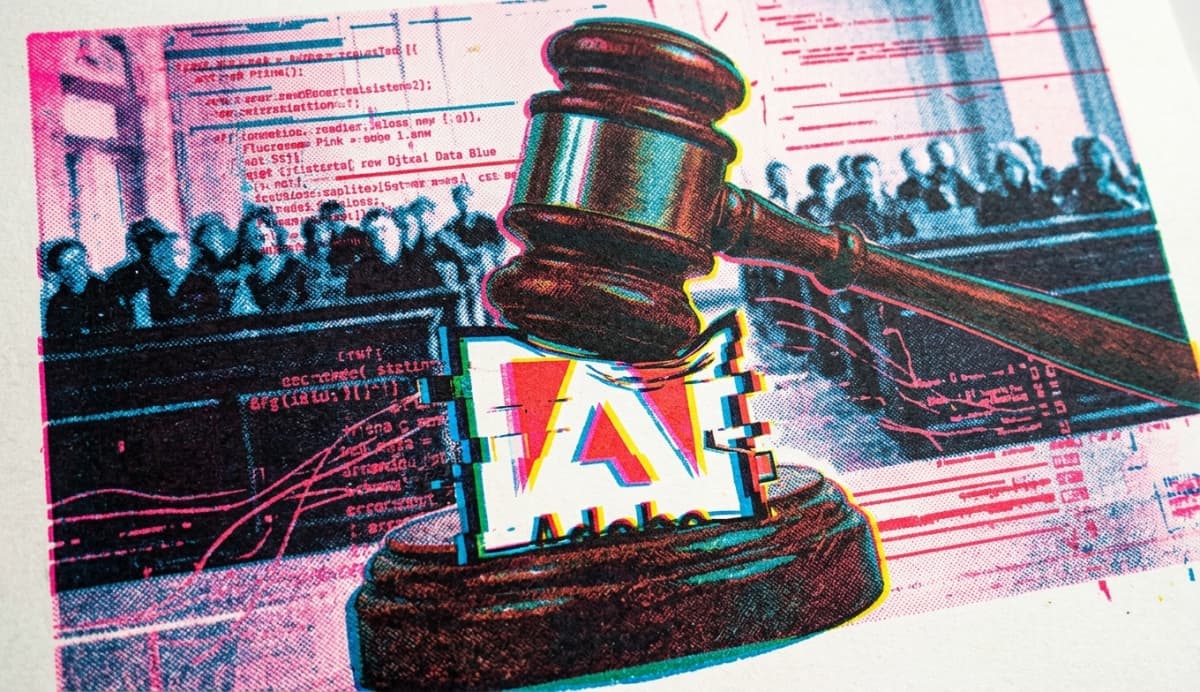

If you have ever tried to cancel an Adobe Creative Cloud subscription and found yourself stuck in a loop of pop-ups, warnings, and unsolicited offers, you were not alone. The US Department of Justice (DOJ) has now confirmed that millions of subscribers faced the same issue and suspected that Adobe made that process difficult on purpose.
The case itself dates back to June 2024, when US regulators first filed a complaint against Adobe over its subscription practices. On March 13, 2026, the DOJ filed a proposed stipulated order against Adobe Inc. and two of its senior employees, Maninder Sawhney and David Wadhwani, to resolve those allegations under the Restore Online Shoppers’ Confidence Act (ROSCA). The settlement, pending court approval, requires Adobe to pay $150 million, $75 million in civil penalties, and provide another $75 million in free services to affected customers.
The Hidden Fee at the Centre of It All
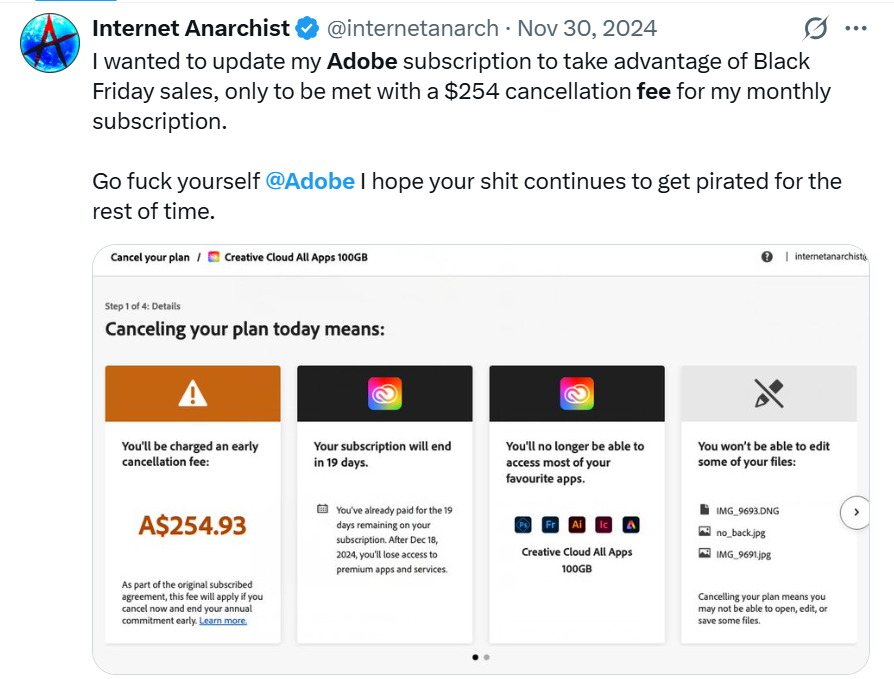
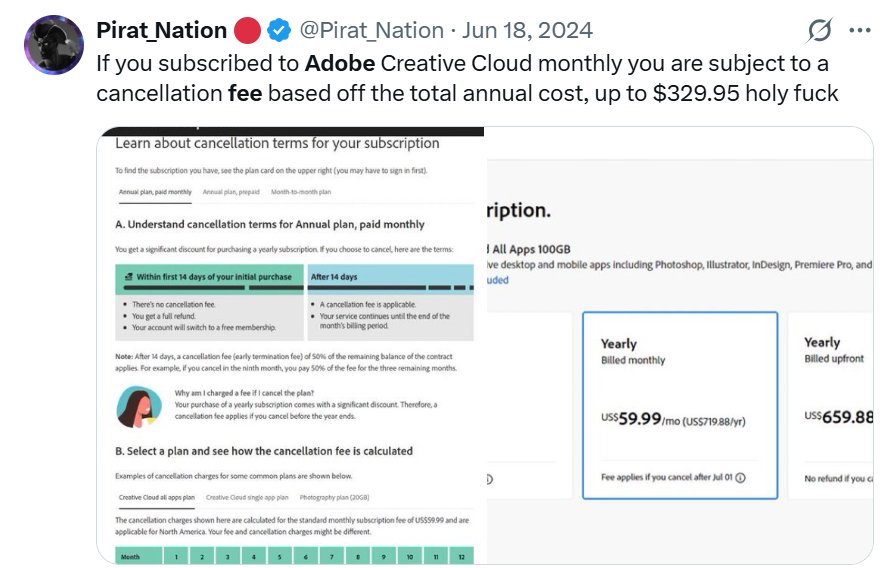
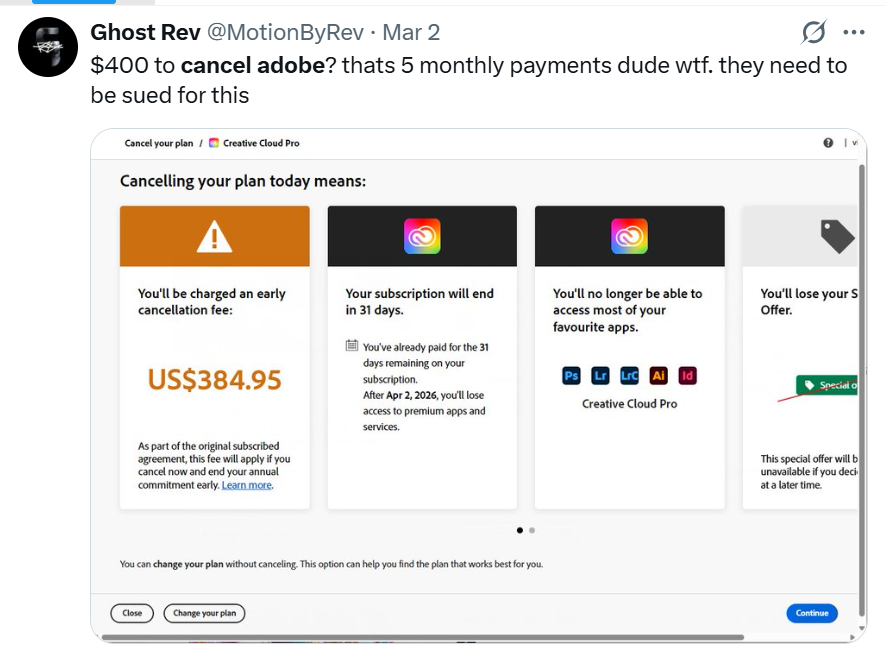
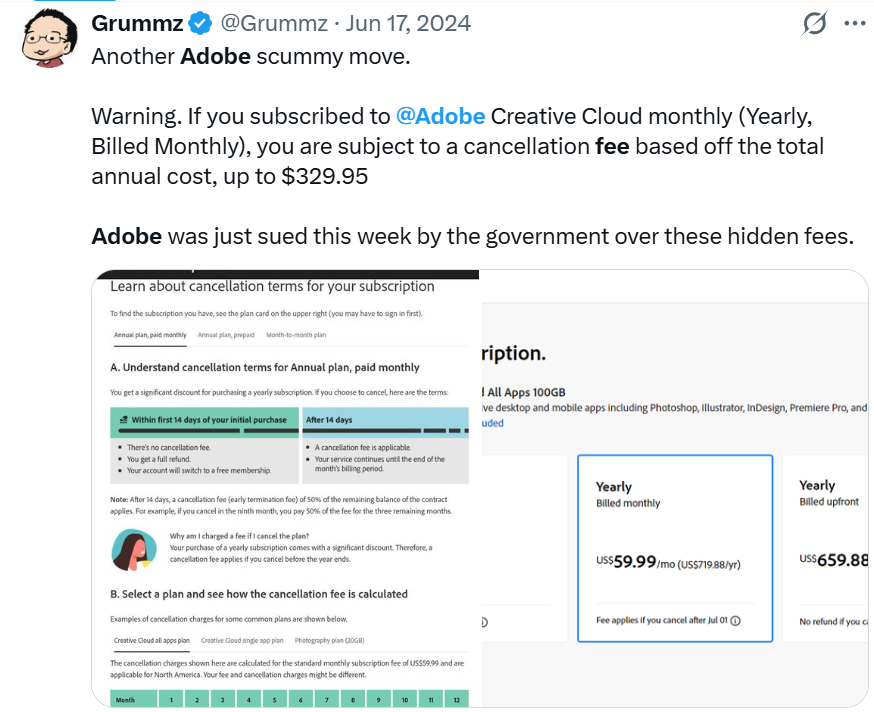
The main point of the government’s complaint is an Early Termination Fee that Adobe applied to customers who cancelled their annual subscription plans before the year was up. The problem was not the fee itself; it was where Adobe disclosed it.
According to the complaint filed in the US District Court for the Northern District of California, the company buried that information in fine print and inconspicuous hyperlinks, away from the parts of the sign-up structure that customers actually go through.
For context, ROSCA was specifically designed to stop this kind of practice. The law requires that any business offering online subscriptions must clearly communicate the key terms before a customer signs up, and must give those same customers a straightforward way to cancel. Adobe, the DOJ alleged, failed on both counts.
A Cancellation Process Built to Frustrate
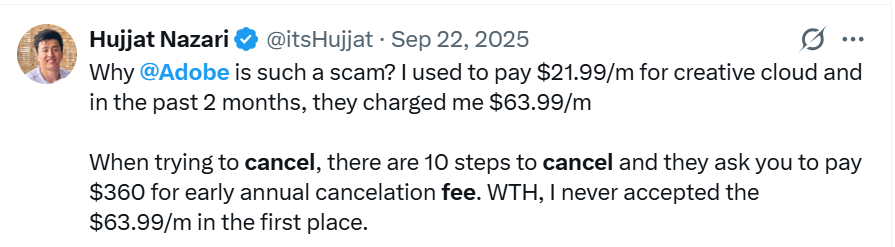
In addition to the hidden fee, the government also took issue with what happened when a customer tried to leave. Adobe’s cancellation flow was described in the complaint as complex and inefficient, with unnecessary steps, delays, and warnings designed to wear users down before they could complete the process.
For a company whose products are used by creative professionals who depend on reliable software tools, that kind of dubiousness carries real financial consequences. “American consumers deserve the right to make informed choices when deciding where to spend their hard-earned money,” said Assistant Attorney General Brett A. Shumate.
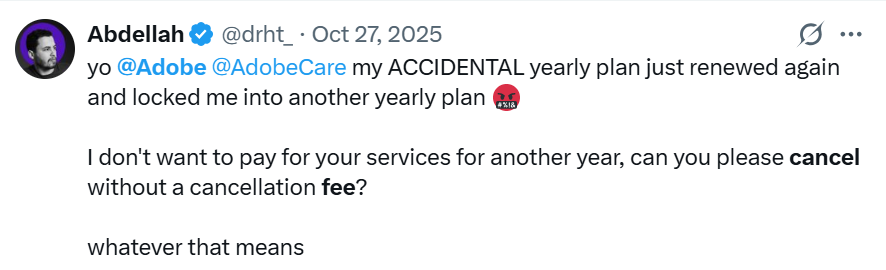
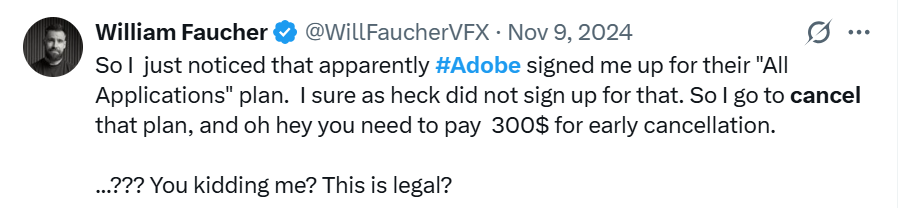
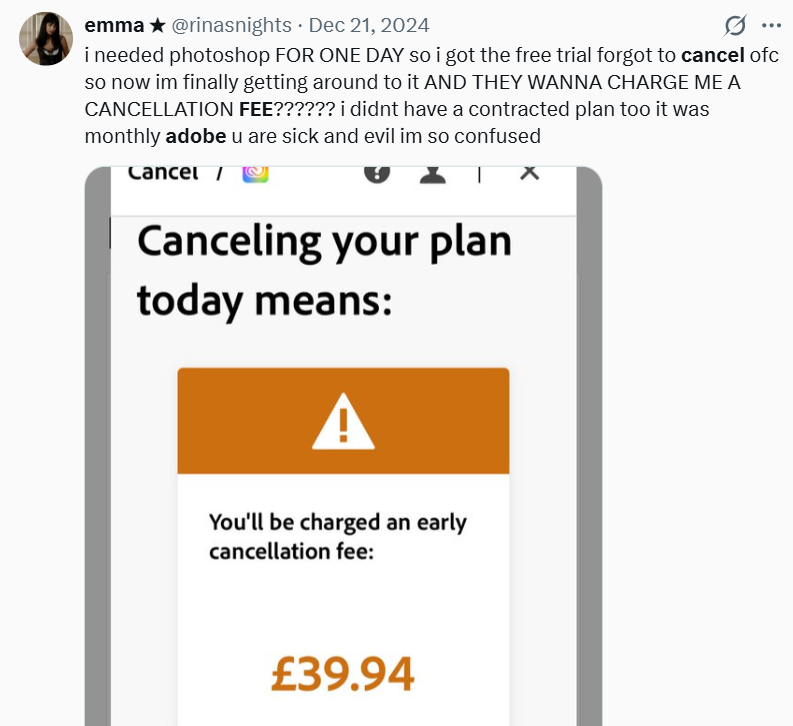
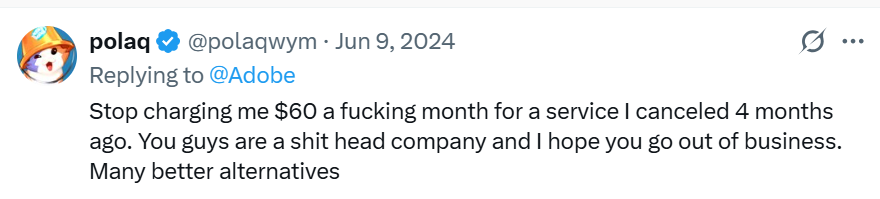
Adobe Users React to Hidden Fees and Hard-to-Cancel Subscriptions
What Adobe Has to Do Now
The proposed order now sets out specific behavioural requirements Adobe must follow going forward. Before enrolling any customer in a subscription, Adobe will be required to clearly disclose the Early Termination Fee and explain exactly how it is calculated.
For free trials that run longer than seven days, Adobe must send a reminder to customers before converting them into a paid plan that carries that fee. The company must also provide a genuinely easy cancellation path.
If you signed up for an Adobe annual plan and were charged a cancellation fee without having understood that up front, the $75 million in customer remedies included in the settlement is worth watching. Adobe has not yet announced the specifics of how eligible customers will be identified or compensated.