



Press play to start listening
Disclosure: This article was provided by ANY.RUN. The information and analysis presented are based on their research and findings.
Cybercriminals are using AI to launch more convincing phishing attacks, scale their campaigns, and find new ways to slip past security defenses. For SOC teams, every missed alert or delayed investigation gives attackers more time to steal corporate credentials, access sensitive data, and disrupt business operations.
As investigation queues grow, security leaders face rising operational costs, overloaded analysts, and greater exposure to costly breaches. AI-powered malware analysis is helping organizations uncover hidden threats faster, reduce unnecessary escalations, and handle more incidents without increasing headcount.
Why SOC Teams Are Struggling to Keep Up with Modern Cyberattacks
A single suspicious file or URL can trigger hours of investigation. Analysts must follow redirects, examine suspicious behavior, check related threats, and document their findings before deciding what action to take. As attacks become more complex, these routine tasks take up valuable time that could be spent responding to critical incidents.
| SOC challenge | Business impact |
| Hidden attack chains behind CAPTCHAs, redirects, and legitimate websites | Missed threats and delayed detection |
| Repetitive manual investigations | Higher costs and slower response |
| Disconnected threat intelligence | Incomplete threat visibility and longer investigations |
| Time-consuming report preparation | Delayed escalations and response decisions |
| Growing alert queues | Analyst overload and increased risk of missed threats |
These challenges make it harder for SOCs to investigate threats thoroughly without increasing costs or headcount.
How AI Is Changing the Way SOC Teams Investigate Threats
AI-powered malware analysis is taking over some of the most time-consuming parts of security investigations, from following hidden attack chains to connecting related threats and preparing incident reports.
- AI-Assisted Automation Exposes Hidden Phishing Attacks
A recent ANY.RUN sandbox investigation shows how AI-assisted automation can uncover hidden attack chains, saving analysts time on repetitive steps while giving them the freedom to take control whenever needed.
The investigation started with a PDF hosted on Adobe’s legitimate platform. Inside, an embedded link led through additional steps, including a CAPTCHA challenge, before revealing a Microsoft OAuth phishing flow targeting corporate accounts.
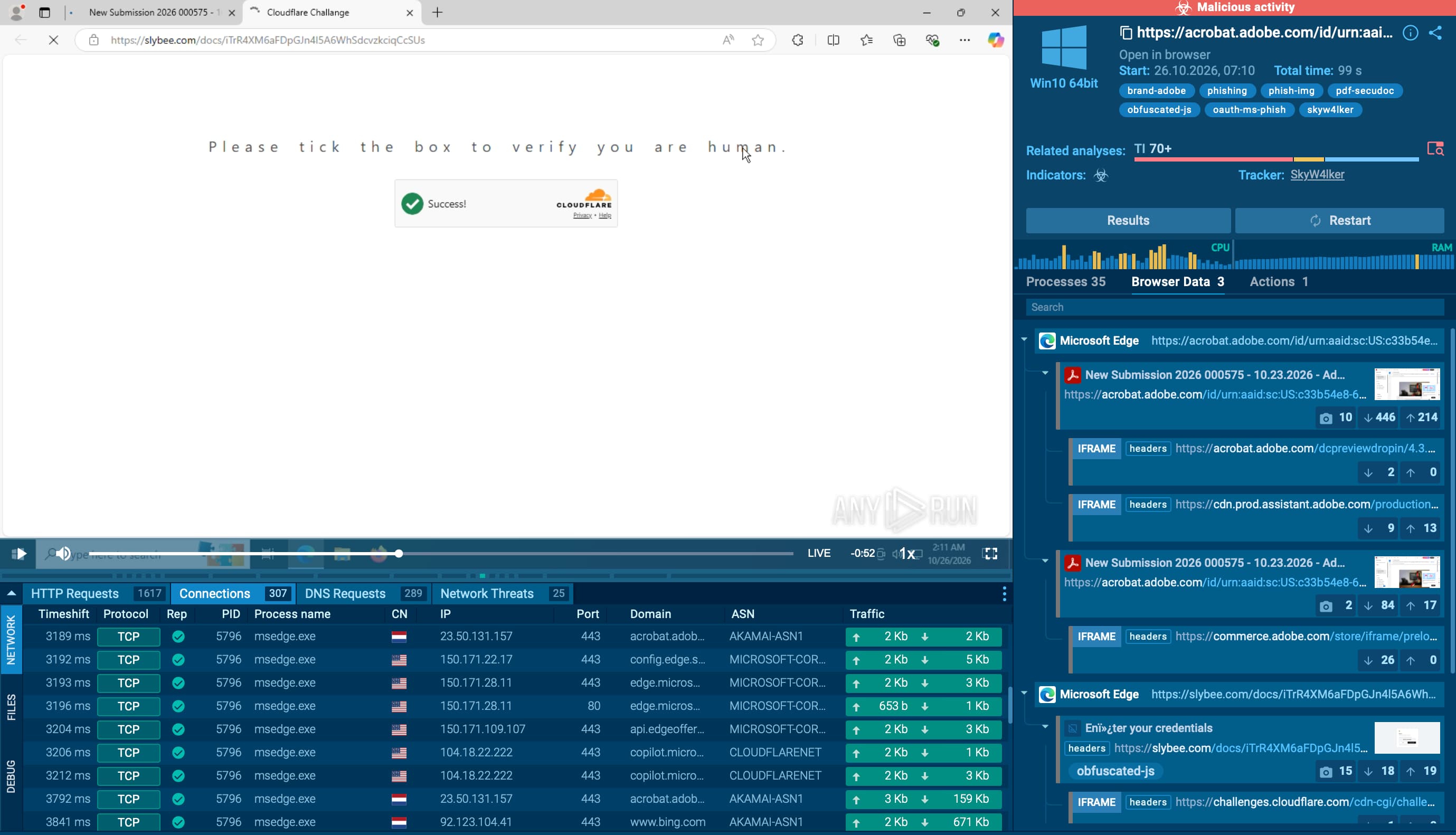
With Automated Interactivity enabled, the sandbox continued navigating the attack without requiring an analyst to handle every click. The combination of automation and interactivity meant the investigation could continue automatically, while security professionals could step in at any point to inspect suspicious activity or explore other paths.
The SOC Advantage: Less Clicking, More Investigating
Instead of spending time manually reproducing attacks before they can even assess the threat, analysts can focus on suspicious behavior and decisions that require human judgment. This helps security teams investigate more alerts without sacrificing visibility or control.
| Give your SOC the power of AI to uncover hidden threats faster, reduce manual investigations, and stop costly incidents without adding more analysts. Accelerate Threat Analysis with AI |
- Related Threat Context Speeds Up Campaign Investigations
Finding one malicious link could be just the beginning. Behind it may be an entire phishing campaign involving dozens of related domains, shared infrastructure, and attacks that have already been investigated elsewhere. Without the right context, security teams risk treating connected threats as isolated incidents.
This is where ANY.RUN’s powerful new Related Threat Context capability changes the investigation. It gives analysts a direct shortcut from a single suspicious indicator to a network of related sandbox analyses, exposing connections across attacks and providing valuable intelligence without starting the investigation from scratch.
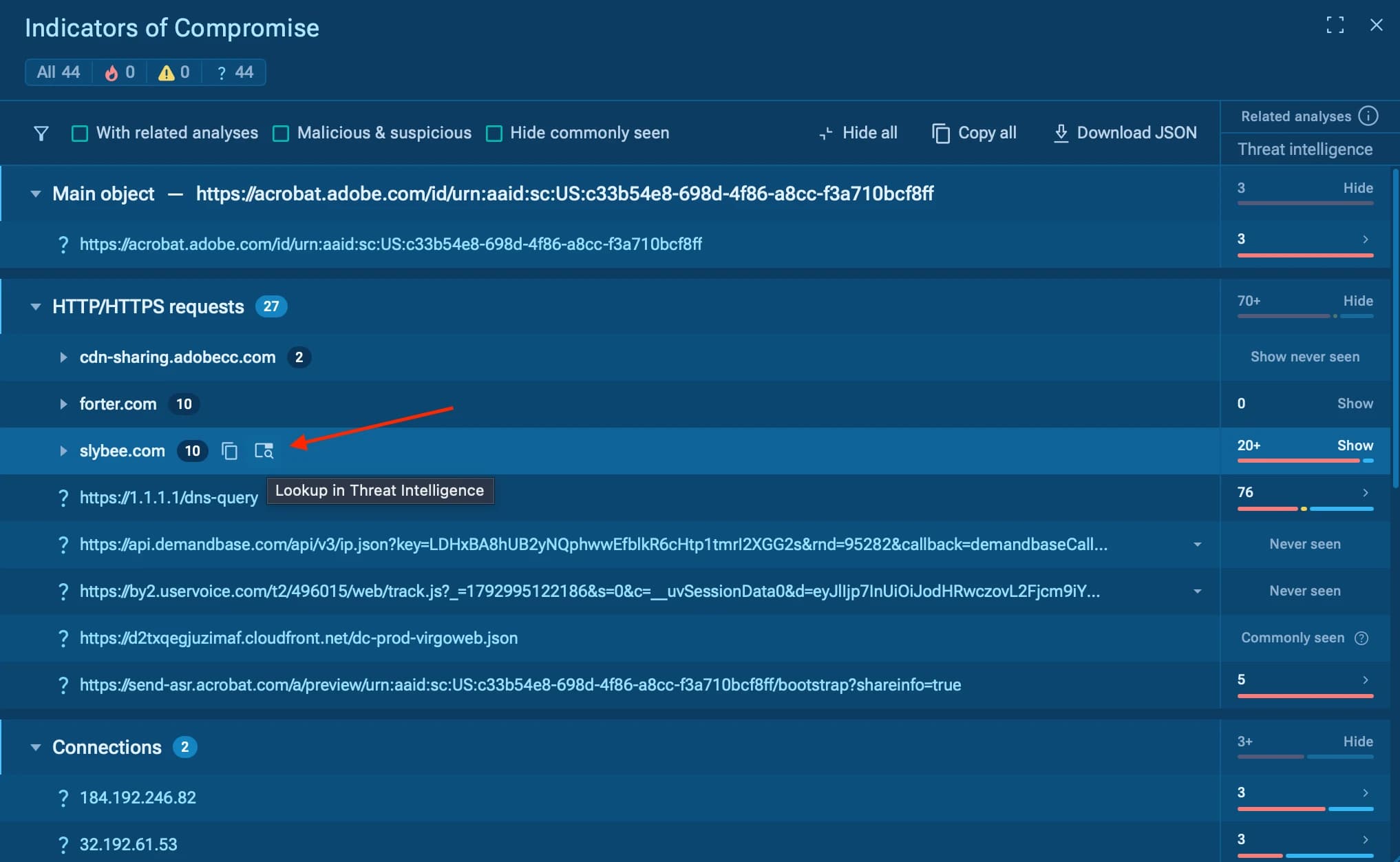
In the Adobe PDF investigation, the capability surfaced more than 70 related analyses, helping researchers trace connections to the wider SkyW4lker phishing campaign. Analysts could explore related infrastructure, previous attack activity, and suspicious patterns to better understand the scale of the threat.
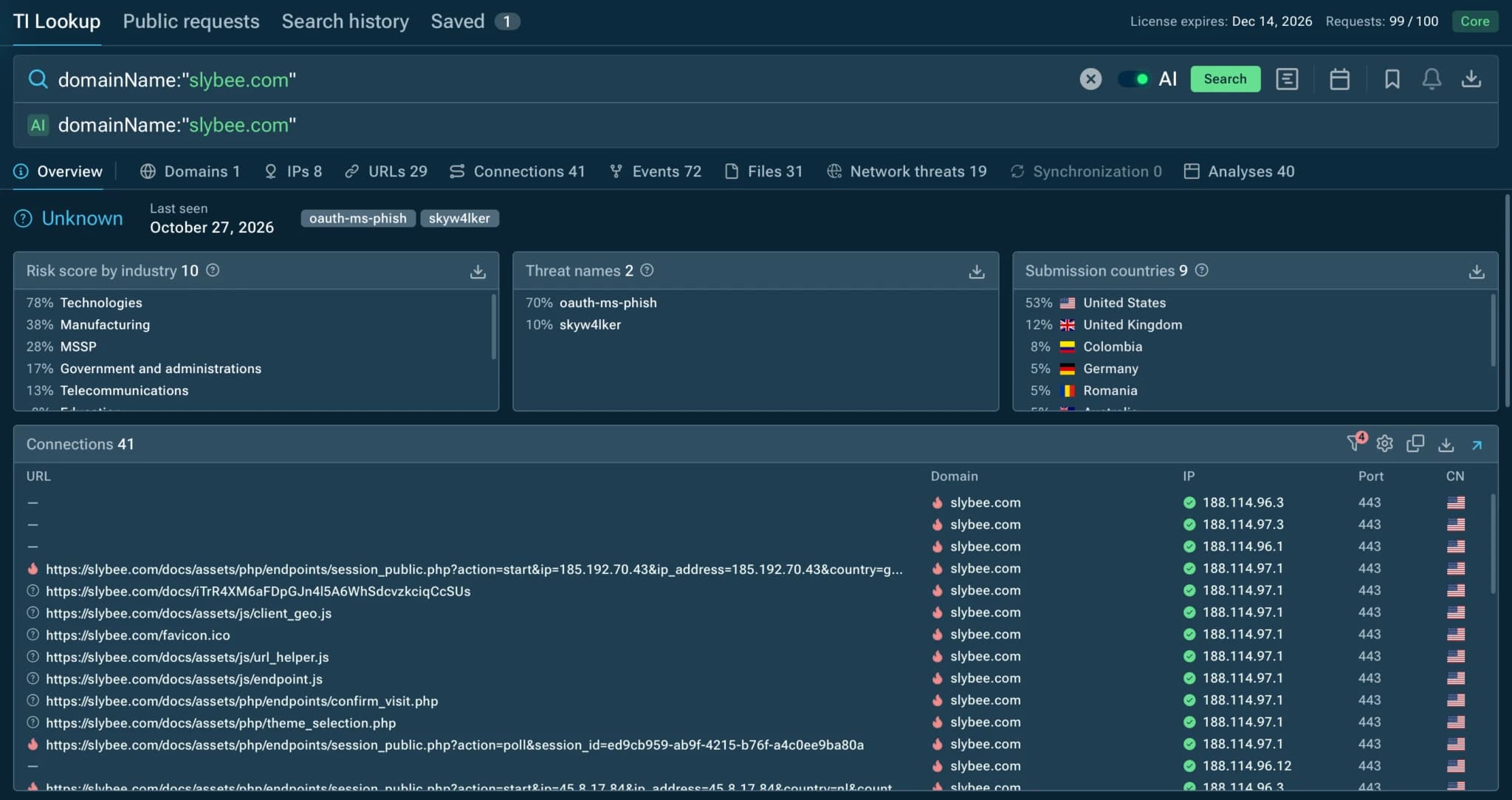
The SOC Advantage: Fewer Blind Spots, Faster Response
A single investigation can now provide the context needed to make more informed security decisions. Instead of wasting resources on disconnected alerts, SOC teams can identify which threats are related, prioritize high-risk activity, and focus their response efforts where they matter most. This means fewer missed connections, less repetitive work, and a lower risk of costly incidents.
- AI-Generated Reports Turn Complex Findings into Faster SOC Decisions
Uncovering a threat is only half the job. Analysts still need to review the evidence, explain what happened, assess the risks, and document their findings for the next stage of response. Preparing these reports manually can take valuable time, especially when multiple incidents need attention.
AI is now helping reduce this workload. ANY.RUN’s SOC-ready Tier 1 Report automatically brings investigation evidence together and generates an AI Summary explaining the observed malicious behavior, along with AI Recommendations suggesting practical next steps based on the findings.
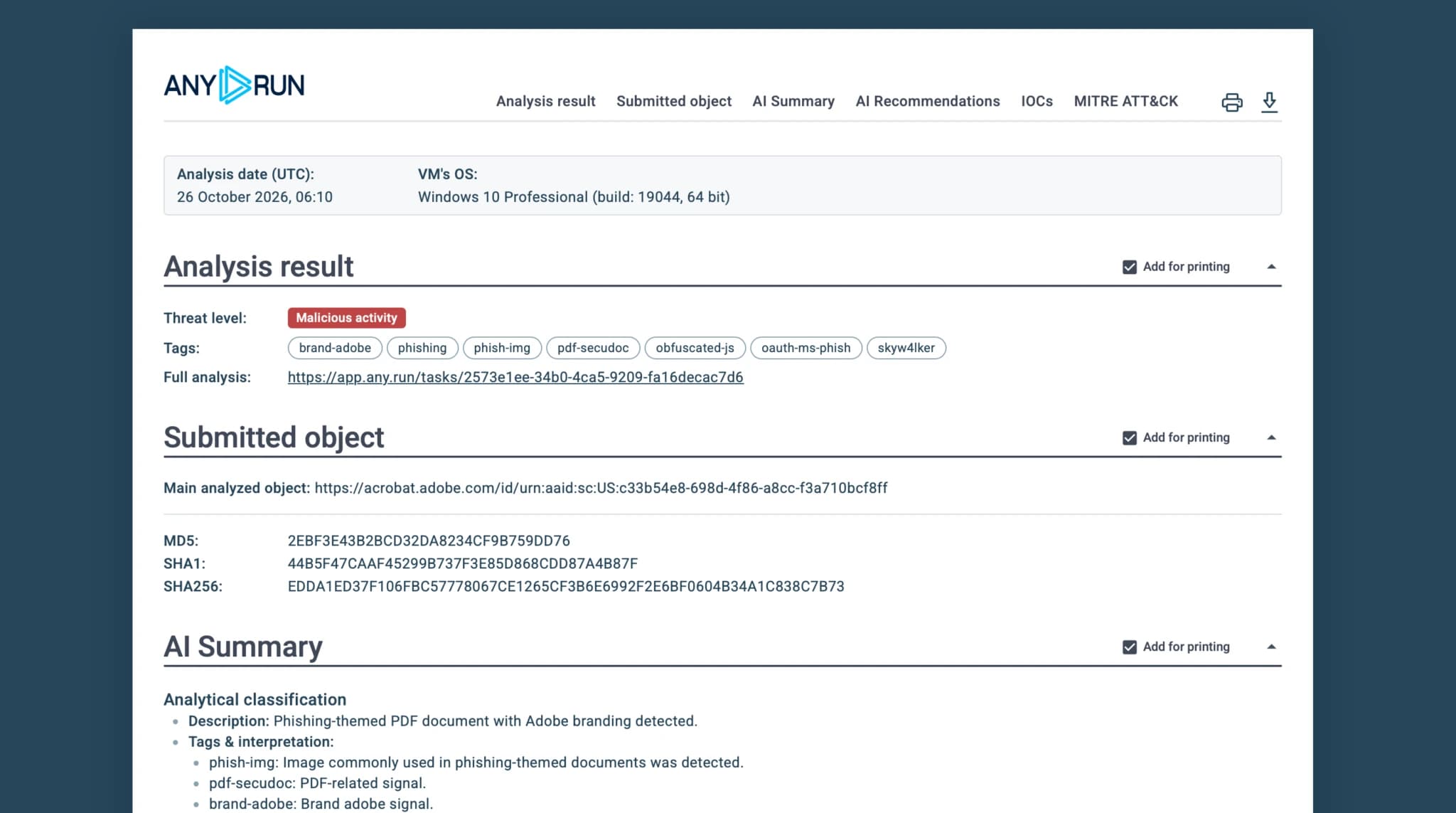
For example, in the Adobe PDF investigation, the report helps analysts understand the Microsoft OAuth phishing flow, review supporting evidence, and determine what requires further investigation or escalation.
The SOC Advantage: Faster Decisions, Fewer Escalations
With investigation findings and recommended next steps already documented, Tier 1 analysts can make faster decisions without spending hours preparing reports. According to ANY.RUN’s reported customer results, improved investigation workflows can reduce Tier 1 workload by up to 20% and cut Tier 1-to-Tier 2 escalations by 30%, helping security teams respond faster, avoid duplicated work, and reduce the risk of costly incidents.
AI-Powered SOCs: Faster Investigations, Stronger Business Protection
As cybercriminals use AI to make attacks more sophisticated, businesses need to rethink how their security teams work. Detecting a suspicious file or link is only the beginning. What matters is understanding the threat, connecting the evidence, and responding before real damage is done.
AI-powered malware analysis helps security teams do exactly that, taking repetitive work off analysts’ shoulders while keeping them in control of important decisions. This allows organizations to get more out of their existing resources, keep costs under control, and respond to threats with greater confidence.
For security leaders, the goal is simple: give analysts more time to focus on the threats that matter most and prevent small security incidents from turning into costly business problems.
| Reduce business risk and SOC operating costs with AI-powered malware analysis that helps your security team handle more threats without increasing headcount. Strengthen Your SOC with AI |