






Press play to start listening
The financial sector is a high-value target for cyberattacks due to its data sensitivity, complex systems, and real-time processing demands. Conventional security architectures, centralized, perimeter-based, and often reactive, struggle to keep up with distributed and automated threats.
With over 15 years of experience in software development, I’ve built high-load, distributed systems for financial and investment platforms. Working on large-scale financial systems, I’ve repeatedly encountered real-world vulnerabilities, such as central points of failure, opaque audit trails, and fragmented identity systems, not due to a lack of tools, but because of structural limitations, which blockchain-based models can directly address.
Blockchain offers a structural alternative. It introduces a decentralized, tamper-resistant structure that can improve how financial systems verify transactions, protect identities, and maintain auditability. Unlike traditional models, it’s designed to prevent compromise at the infrastructure level.
This article explores how blockchain is already addressing real cybersecurity problems in finance, drawing from real-world implementations and outlining what it takes to deploy this technology at scale.
Blockchain Beyond Crypto: Understanding the Technology
Blockchain is commonly linked with cryptocurrencies like Bitcoin, but its potential extends significantly beyond digital currencies. At its core, blockchain is a distributed ledger system that securely records transactions across multiple independent nodes. Each transaction is timestamped, cryptographically verified, and permanently recorded, making unauthorized alterations virtually impossible.
For financial institutions, blockchain matters because it securely streamlines transactions without the need for intermediaries, thus minimizing errors, delays, and fraud risks. Its essential strengths include:
- Decentralization: Eliminates single points of failure.
- Immutability: Provides a tamper-proof transaction history.
- Transparency: Allows all network participants to independently verify transactions.
The diagram below illustrates blockchain’s secure and transparent transaction validation process. Transactions are validated through consensus, ensuring data integrity and significantly reducing financial fraud.
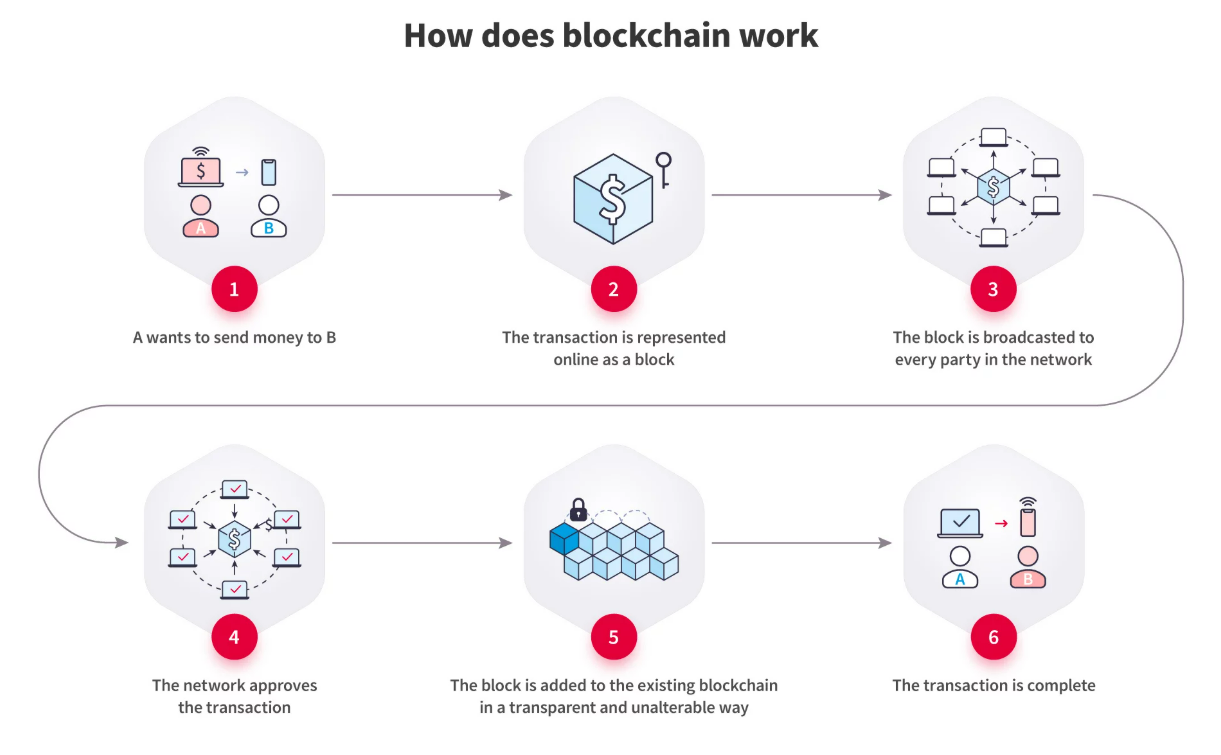
This flow highlights how blockchain guarantees transparency, security, and immutability. Each step in the transaction process, from initiation to validation, ensures that participants in the network agree on the legitimacy of the data.
Where Blockchain Strengthens Cybersecurity
Blockchain helps close longstanding gaps in financial cybersecurity by reinforcing how transactions are validated, identities are confirmed, and audit trails are maintained. Here’s how it compares to traditional security systems:
| Feature | Traditional Security | Blockchain-based Security |
| Transaction Security | Relies on multiple intermediaries, increasing fraud risks and delays | Decentralized consensus ensures secure, immediate validation |
| Identity Verification | Centralized and breach-prone | Distributed, cryptographically protected identities |
| Audit Trails | Manual, prone to errors and manipulation | Automatic, immutable, tamper-proof |
“Security by decentralization isn’t just a concept – in finance, it’s a shift in how we define responsibility and resilience.”
– Oleg Kubrak, a fintech software development expert
Securing Digital Transactions
Blockchain’s decentralized verification processes (e.g., Proof of Work, Proof of Stake) secure digital transactions far more effectively than traditional centralized methods. Think of traditional transaction methods as storing assets in a single, centralized vault, if compromised, all is lost. Blockchain distributes these assets securely across multiple vaults, significantly reducing vulnerability.
Improving Identity Verification
Many Know Your Customer (KYC) processes are still anchored in outdated, centralized databases. Blockchain enables encrypted digital identities that are validated across a network but accessible only under controlled conditions. This makes impersonation or data theft far more difficult.
Tamper-Proof Audit Trails
Audit logs are essential for regulatory compliance but are often handled manually or bolted on after the fact. Blockchain creates an automatic, tamper-resistant history of actions. Concerns about node compromise are minimal since altering blockchain records would require controlling a majority of the network simultaneously, an exceedingly improbable scenario.
Fighting Fraud and Cyberattacks: Real-World Impact
Cyber threats facing the financial sector have intensified dramatically in recent years. According to McKinsey’s research on cybersecurity trends, the increasing access to vast data sets and the rise of AI-driven attacks are accelerating the vulnerability of organizations. Hackers now leverage machine learning and automation, significantly reducing the time required to execute attacks, from weeks to days or even hours.
As the number and frequency of cyberattacks rise, so too does the investment in cybersecurity. Solutions are shifting towards cloud-based models, with a growing emphasis on flexibility, scalability, and the ability to respond rapidly to emerging threats. This transition reflects broader trends in the industry, where more organizations are moving their security infrastructure to the cloud for enhanced protection and efficiency.
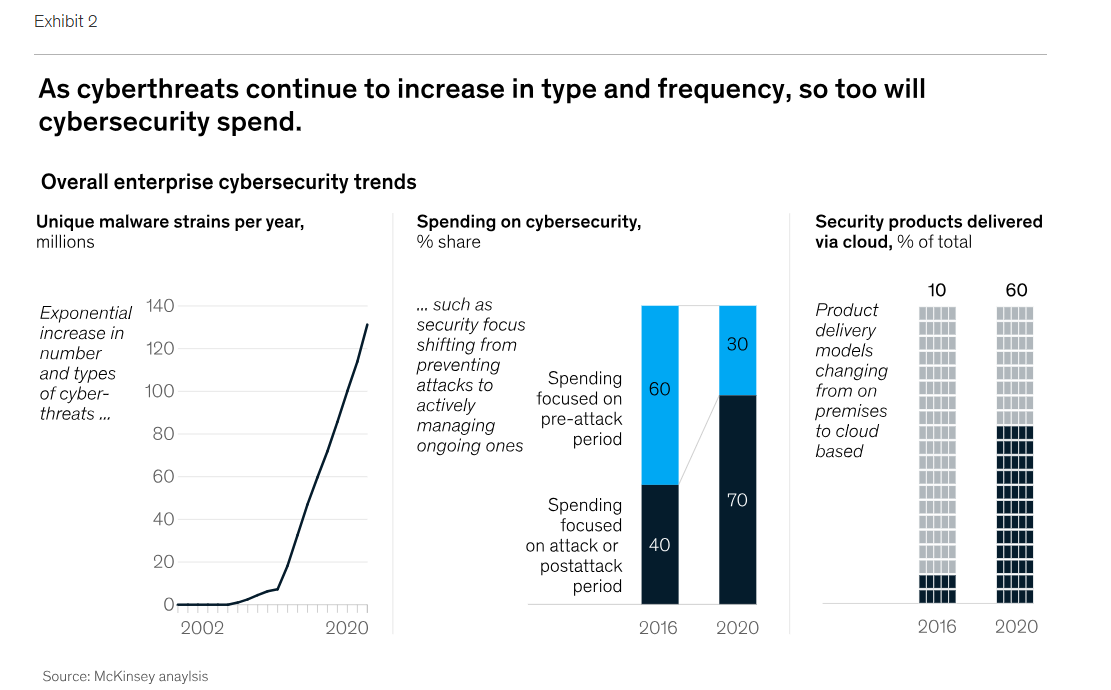
Companies are increasingly focusing on actively managing ongoing attacks, as opposed to just preventing them. For instance, Barclays Bank in England is currently exploring blockchain solutions to enhance its KYC processes, securely storing and verifying customer identities to reduce identity fraud significantly.
Similarly, JPMorgan’s Quorum blockchain has implemented advanced cryptographic protocols, anonymizing transaction data to mitigate insider threats while retaining robust transparency for regulatory compliance.
“In the basic Zether, the account balances and the transfer accounts are concealed but the participants’ identities are not. So we have solved that. In our implementation, we provide a proof protocol for the anonymous extension in which the sender may hide herself and the transaction recipients in a larger group of parties.”
– Oli Harris, Head of Quorum and Crypto-Assets Strategy, JPMorgan
Current Implementations in the Financial Industry: Moving from Pilot to Practice
Several financial institutions are actively deploying blockchain in production environments. For instance, the fintech platform Veem uses blockchain to facilitate secure, instantaneous cross-border payments. Transactions that traditionally take days through SWIFT are completed in seconds.
Notably, Veem’s blockchain-based transactions represented 62% of their total payment volume in a recent quarter, demonstrating substantial industry confidence in blockchain technology’s capability to combat payment fraud effectively.
Cybersecurity vendors like Block Armour and Hacken provide dedicated blockchain-based cybersecurity solutions that enforce zero-trust principles and protect against cyber threats across IoT and enterprise networks. These practical implementations validate blockchain as a trusted solution across diverse financial applications, demonstrating measurable improvements in both security and operational efficiency.
Challenges and Future Prospects: What Needs to Change
Despite the momentum, full-scale adoption isn’t straightforward. The real obstacles lie in how institutions operationalize and sustain these systems in live environments.
1. Regulatory Ambiguity
Blockchain’s immutable structure can clash with privacy regulations that require flexibility, such as the ability to alter data or comply with deletion requests under laws like GDPR. In cross-border contexts, this becomes even more complex. Differing standards for data protection, recordkeeping, and breach disclosure across jurisdictions make it difficult to implement a single, compliant blockchain framework. Navigating these requirements demands a thoughtful alignment between technical design and legal innovation.
2. Integration with Legacy Infrastructure
Most financial institutions still operate on legacy infrastructure that was never designed for decentralized models. Effective blockchain deployment involves rethinking workflows, data flows, and governance structures to fully leverage its advantages. Without this shift in mindset, blockchain risks becoming a disconnected add-on rather than a transformative layer.
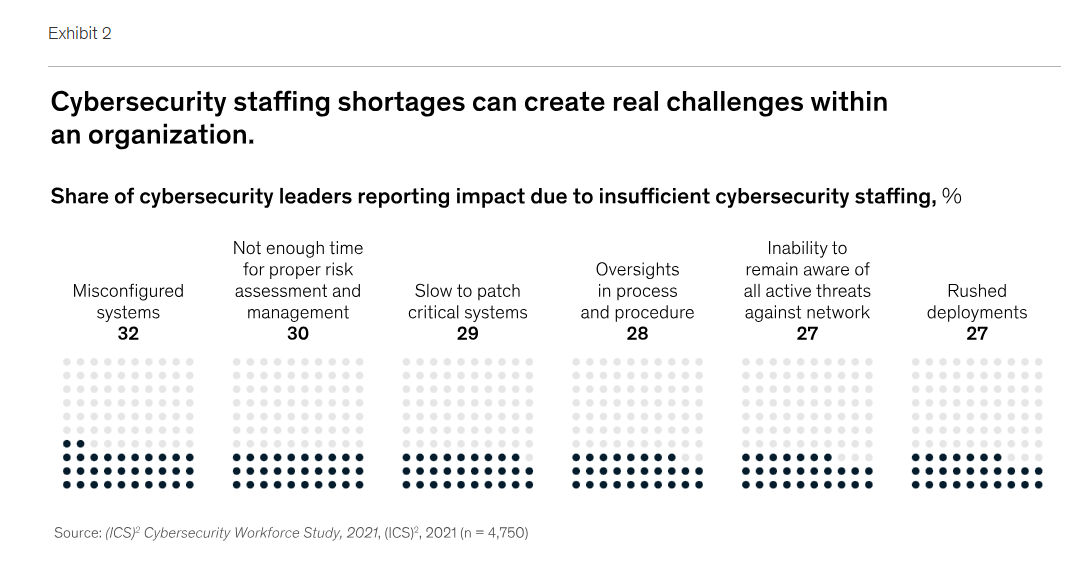
3. Cybersecurity Talent Shortage
Blockchain-specific cybersecurity expertise remains in short supply. Without the right engineers, even promising deployments can falter. Misconfigurations, blind spots, and delayed responses are all risks when teams lack the necessary depth. Addressing the talent gap will be essential for institutions aiming to deploy blockchain securely and at scale.
4. Governance and Cross-functional Alignment
Blockchain spans multiple domains, IT, compliance, legal, and operations, and its success depends on coordinated execution. Establishing clear ownership, accountability, and risk management frameworks is essential. That often requires creating new roles, redefining existing responsibilities, and ensuring cross-functional teams can work in synchrony across disciplines not traditionally aligned.
5. Strategic Positioning
Blockchain is not an inexpensive proposition. The return on investment only materializes when systems are built for scale, aligned with broader digital transformation goals, and supported by teams capable of sustaining them. Institutions that view it as foundational, not supplementary, will be best positioned to future-proof their cybersecurity infrastructure.
Conclusion: Blockchain’s Critical Role in Future Financial Security
Blockchain doesn’t solve every cybersecurity problem, but in financial contexts, it addresses some of the most persistent ones. Its strengths, integrity of records, distributed trust, and tamper resistance, directly address gaps that traditional architectures have struggled with for years.
That said, integrating blockchain isn’t just about adopting a new technology. It’s a structural decision. In my experience, the challenge is rarely the tech itself. It’s aligning people and processes around new principles of trust and data management. When done right, blockchain isn’t just a feature, but a framework.
Based on nearly two decades in financial software engineering, I’ve come to see blockchain not just as a technology, but as a necessary evolution in how trust and control are managed in digital finance.
Financial institutions that understand where blockchain fits, and where it doesn’t, will be more resilient in the face of increasingly automated threats. The payoff is tangible: fewer points of failure, more reliable oversight, and better alignment with the way trust is evolving in digital finance.
References:
Wilson, B. (2022, December 7). Blockchain & Cybersecurity: Improving data security. Network Coverage – Managed IT Service Provider. https://www.netcov.com/blockchain-cybersecurity-improving-data-security/
Tyzhnenko, R. (2020, November 11). Blockchain in Fintech: Benefits for your Business. NIX United – Custom Software Development Company in US. https://nix-united.com/blog/blockchain-in-fintech-benefits-for-your-business/
Levy, A. (2018, February 18). There’s a lot of blockchain hype, but money-transfer start-up Veem is using it today. CNBC. https://www.cnbc.com/2018/02/18/veem-start-up-uses-blockchain.html
Boehm, J., Lewis, C., Li, K., Wallace, D., & Dia, D. (2022, March 10). Cybersecurity trends: Looking over the horizon. McKinsey & Company. https://www.mckinsey.com/capabilities/risk-and-resilience/our-insights/cybersecurity/cybersecurity-trends-looking-over-the-horizon
Ndri, A. (2023, August). The applications of blockchain to cybersecurity. The Repository at St. Cloud State. https://repository.stcloudstate.edu/msia_etds/141/
Allison, I. (2023, May 9). JPMorgan adds privacy features to Ethereum-Based Quorum Blockchain. CoinDesk. https://www.coindesk.com/business/2019/05/28/jpmorgan-adds-privacy-features-to-ethereum-based-quorum-blockchain
Ingalls, S. (2021, July 28). The state of blockchain applications in cybersecurity. eSecurity Planet. https://www.esecurityplanet.com/applications/cybersecurity-blockchain-applications/
Anant, V., Glynn, M., Greis, J., Kosturos, N., Kristensen, I., Lewis, C., & Santos, L. (2022, June 29). Securing your organization by recruiting, hiring, and retaining cybersecurity talent to reduce cyberrisk. McKinsey & Company. https://www.mckinsey.com/capabilities/risk-and-resilience/our-insights/cybersecurity/securing-your-organization-by-recruiting-hiring-and-retaining-cybersecurity-talent-to-reduce-cyberrisk
(Image by Gerd Altmann from Pixabay)


