



Press play to start listening
The Burger King Japan data breach occurred between October 2 and 7, exposing emails, birth dates and other data from nearly 12 million app members.
BK Japan, the operator of Burger King restaurants in Japan, has confirmed a data breach in which personal information from about 11.18 million official app member records was stolen. The exposure occurred after a third party accessed BK Japan’s membership system.
The company, operated by BK Japan Holdings Co., Ltd.and owned by Goldman Sachs Alternatives, disclosed the breach on October 15 in a press release, stating that the breach took place between October 2 and 7 while it discovered the leak on October 13.
Details of the Breach
The exposed data includes customers’ names in kanji and kana, phone numbers, email addresses, dates of birth, gender, prefecture and member IDs. Some records also contained registration details, email verification status, and information about mobile ordering.
BK Japan has not disclosed how the attacker gained access to the system. The reported mobile ordering data indicates whether a member had an order history, rather than revealing specific food orders.
Company Response and Data Exposure
BK Japan’s press release (PDF) stated that it does not store credit card numbers in the affected system, and no credit card numbers were exposed. The company also said it had not confirmed any leakage of login passwords. As of its announcement, no secondary harm, including fraudulent use of the leaked information, had been confirmed.
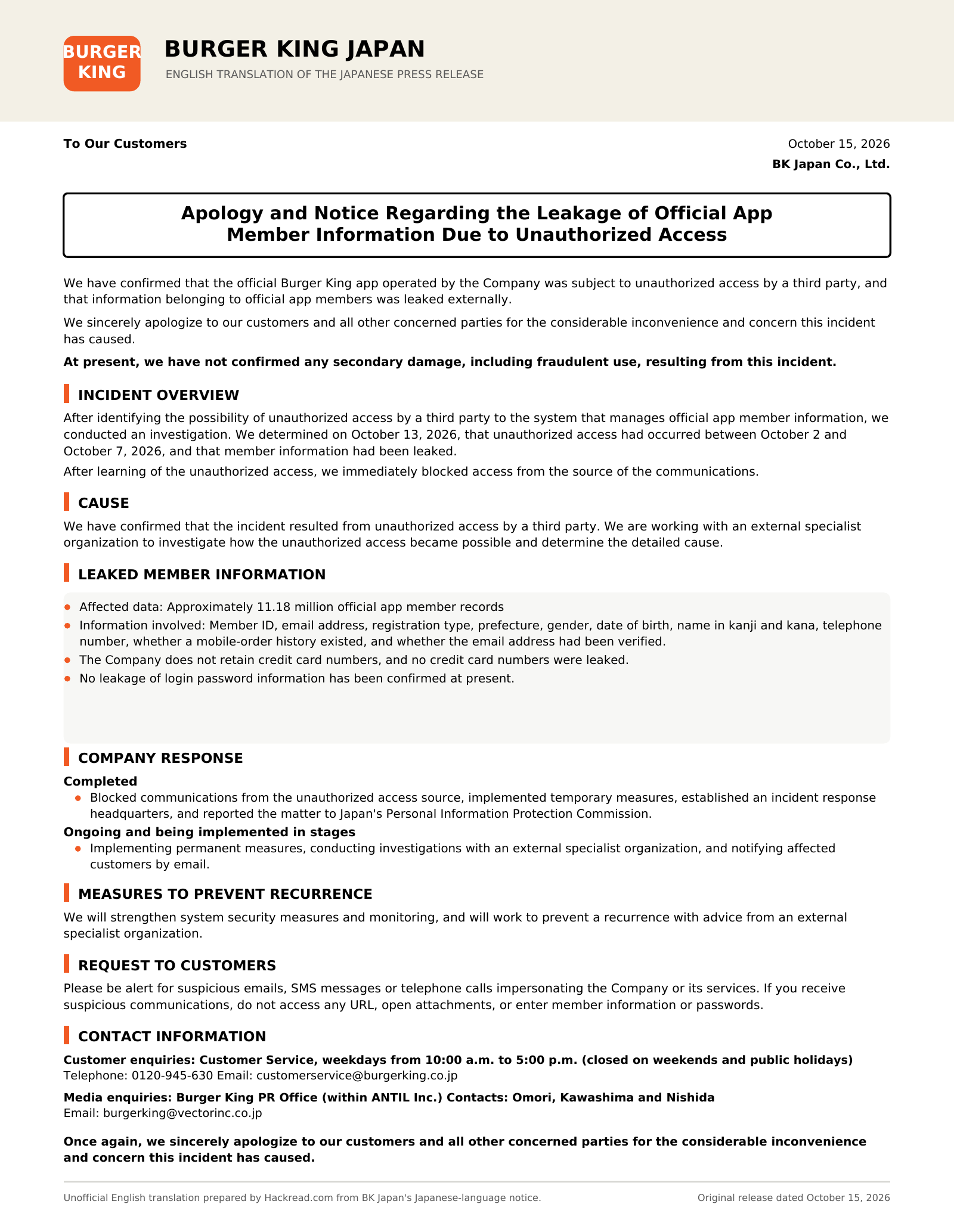
After identifying the unauthorized access, the company blocked connections from the source involved and established a response team. BK Japan reported the breach to Japan’s Personal Information Protection Commission and is working with security experts to find out how the attacker got into the system. The company apologized to customers over the leak.
With names, phone numbers, email addresses and dates of birth exposed, affected customers may face more convincing phishing attempts. Hackread.com reported a similar concern after Revolut disclosed a data breach and phishing messages targeting its customers emerged. However, researchers did not establish whether the messages were connected to the breach.
Expert’s Comments:
Ensar Seker, CISO at cybersecurity company SOCRadar, shared his comments with Hackread.com, warning that the risks could extend beyond the initial breach.
“The risk extends beyond the initial breach. Names, dates of birth, email addresses and phone numbers can help criminals make fraudulent messages feel credible. An attacker could impersonate Burger King support, reference the breach and ask a customer to ‘secure’ their account through a fake verification page. That is a plausible follow-on threat, rather than evidence that such a campaign has already occurred,” Seker said.
He also warned that seemingly minor account details could help scammers tailor their messages. “Knowing whether someone used mobile ordering could help tailor a convincing message without knowing what they actually purchased.”
Seker advised customers to open the official app or website directly to check security notices and never share passwords or verification codes with someone who contacts them.
“For businesses, this reinforces why customer profile data deserves strong protection alongside credentials and payment information. Collecting less data, limiting access to member databases and detecting unusual bulk retrieval can reduce the impact of a compromise. Account recovery also needs protection: knowing a customer’s birthday or phone number should never be enough to establish their identity,” he added.