



Press play to start listening
Disclosure: This article was provided by ANY.RUN. The information and analysis presented are based on their research.
ANY.RUN’s 2026 data shows that email makes up nearly 1 in 3 MSSP analyses. That means phishing takes up a big share of day-to-day work for Tier 1. And the problem is not always finding something suspicious; it is figuring out quickly whether the case is harmless, malicious, or worth sending to Tier 2.
When that decision takes too long, analysts spend more time switching between tools, checking extra context, and escalating cases just to be safe.
For an MSSP handling large volumes across multiple clients, those delays add up fast. The more Tier 1 can resolve on its own, the more time senior analysts have for the cases that actually need deeper investigation.
Where Tier 1 Loses Time During Phishing Triage
Most delays happen before the analyst can make a confident decision. A phishing case may look simple at first, but the investigation often branches into several steps:
- Checking attachments and archives for suspicious behavior.
- Following redirects to reach the final phishing page.
- Handling QR codes, CAPTCHAs, or other interaction gates that block basic automated checks.
- Reviewing credential pages that closely imitate legitimate services.
- Tracing payload delivery when phishing leads to scripts, installers, or remote-access tools.
- Looking up domains, IPs, URLs, and files across separate threat intelligence sources.
- Documenting findings before closing or escalating the case.
None of these steps is unusual on its own. The problem is how quickly they add up when Tier 1 is handling phishing across multiple customers.
That is where triage starts turning into a capacity issue.
What Tier 1 Needs to Resolve Phishing Without Escalating
A stronger triage workflow can cut Tier 1 investigation time by 20%, reduce Tier 1→Tier 2 escalations by 30%, and lower MTTR by 21 minutes.
The biggest gains come from giving analysts the right context at the right stage. Here’s what that looks like in practice:
1. Full Visibility into the Phishing Chain
Tier 1 needs to see what happens after the email is opened, not just what the message looks like at first glance.
A single case can move through several stages: an attachment launches a script, a link redirects through multiple domains, a QR code leads to a credential page, or a fake document delivers an RMM tool.
Interactive analysis helps analysts follow that chain in real time and see the behavior behind it: redirects, processes, network connections, dropped files, and payload execution.
For MSSPs, this matters because the more of the chain Tier 1 can see during the first investigation, the less likely they are to escalate a case simply because one step is still unclear.
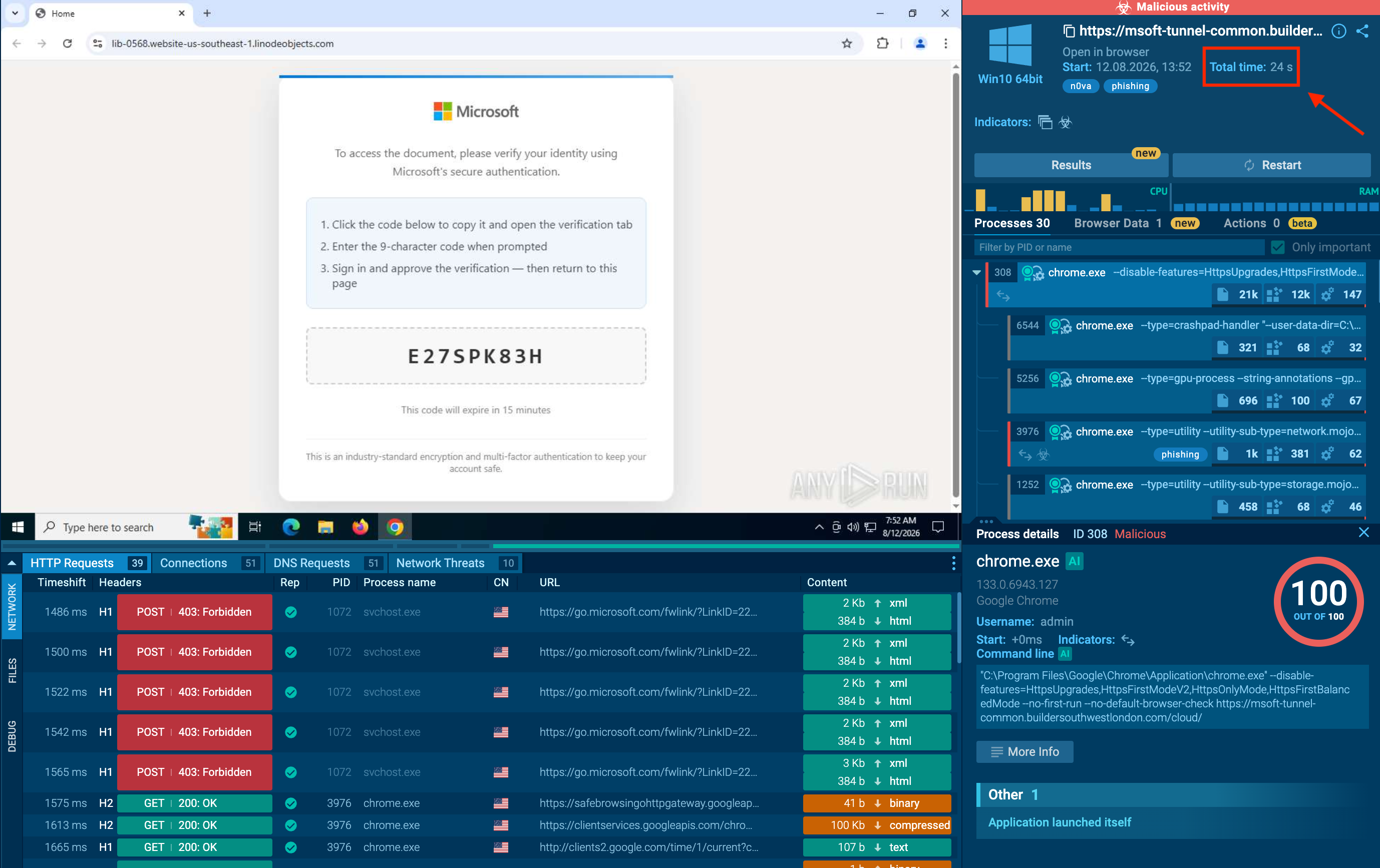
A good example is the N0va campaign analyzed in ANY.RUN’s Interactive Sandbox, where the full attack chain became visible in just 24 seconds. That kind of visibility helps analysts move from suspicion to evidence much faster.
| 30% Fewer Escalations. 21 Minutes Lower MTTR. Resolve phishing faster with less Tier 2 involvement. Improve MSSP Response |
2. Balance Automation with Hands-On Analysis
Phishing analysis cannot always be fully automated. Some pages only reveal the next stage after a CAPTCHA is solved, a QR code is scanned, a button is clicked, or credentials are entered.
A stronger workflow combines both approaches.
ANY.RUN’s Interactive Sandbox automates much of the analysis while still letting Tier 1 step in when the attack requires interaction. Analysts can follow redirects, interact with phishing pages, inspect in-browser activity, or trigger the next stage without restarting the investigation somewhere else.
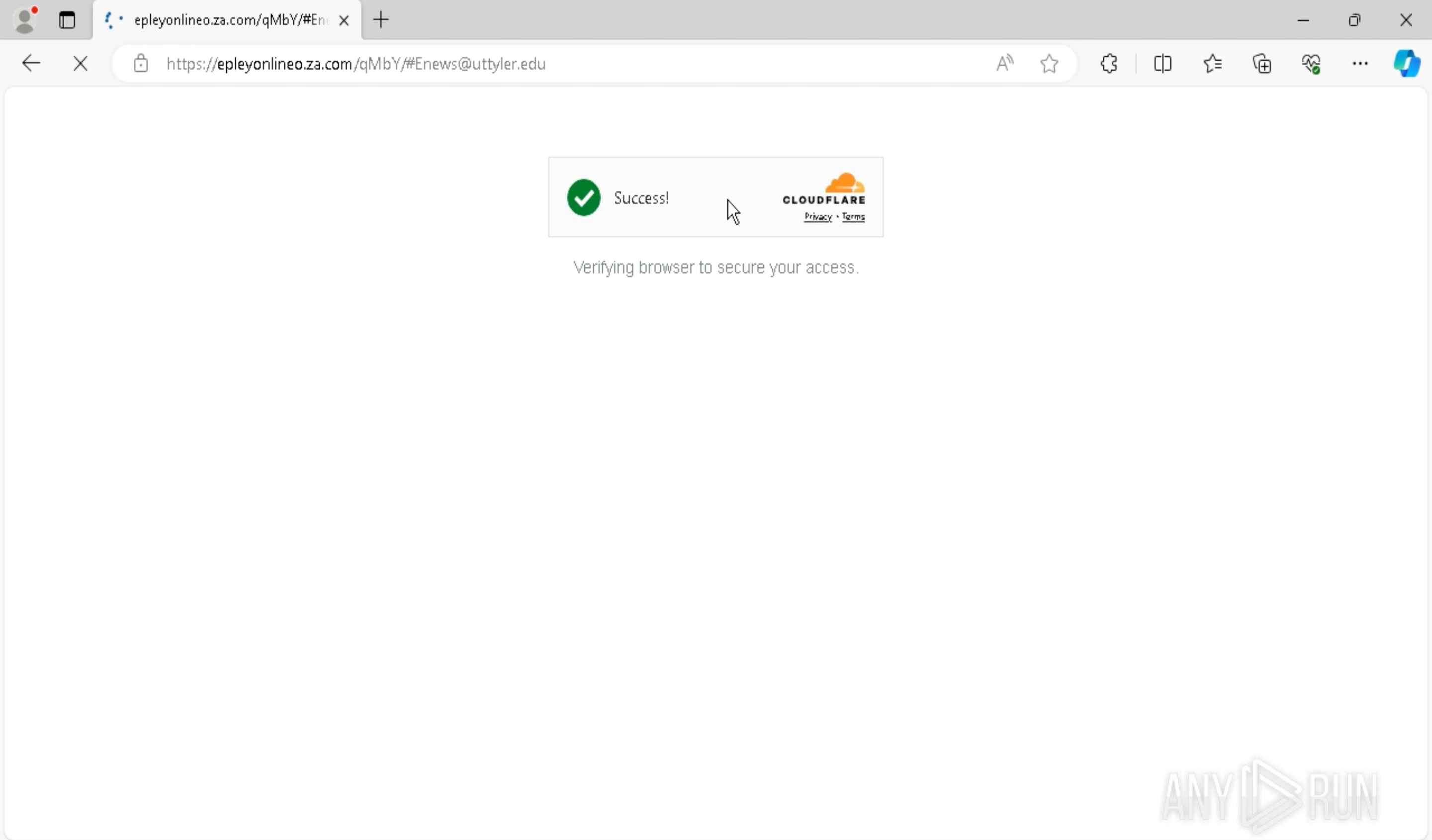
This gives Tier 1 a faster path through routine checks, while still allowing analysts to follow the attack when phishing pages try to hide what happens next.
3. Add Industry-Relevant Threat Context
For MSSPs, phishing does not look the same across every customer. A financial organization, manufacturer, healthcare provider, and SaaS company may face very different campaigns, infrastructure, and attacker behavior.
Tier 1 needs context that helps answer a bigger question: Is this activity relevant to this client’s industry, and have similar threats been seen elsewhere?
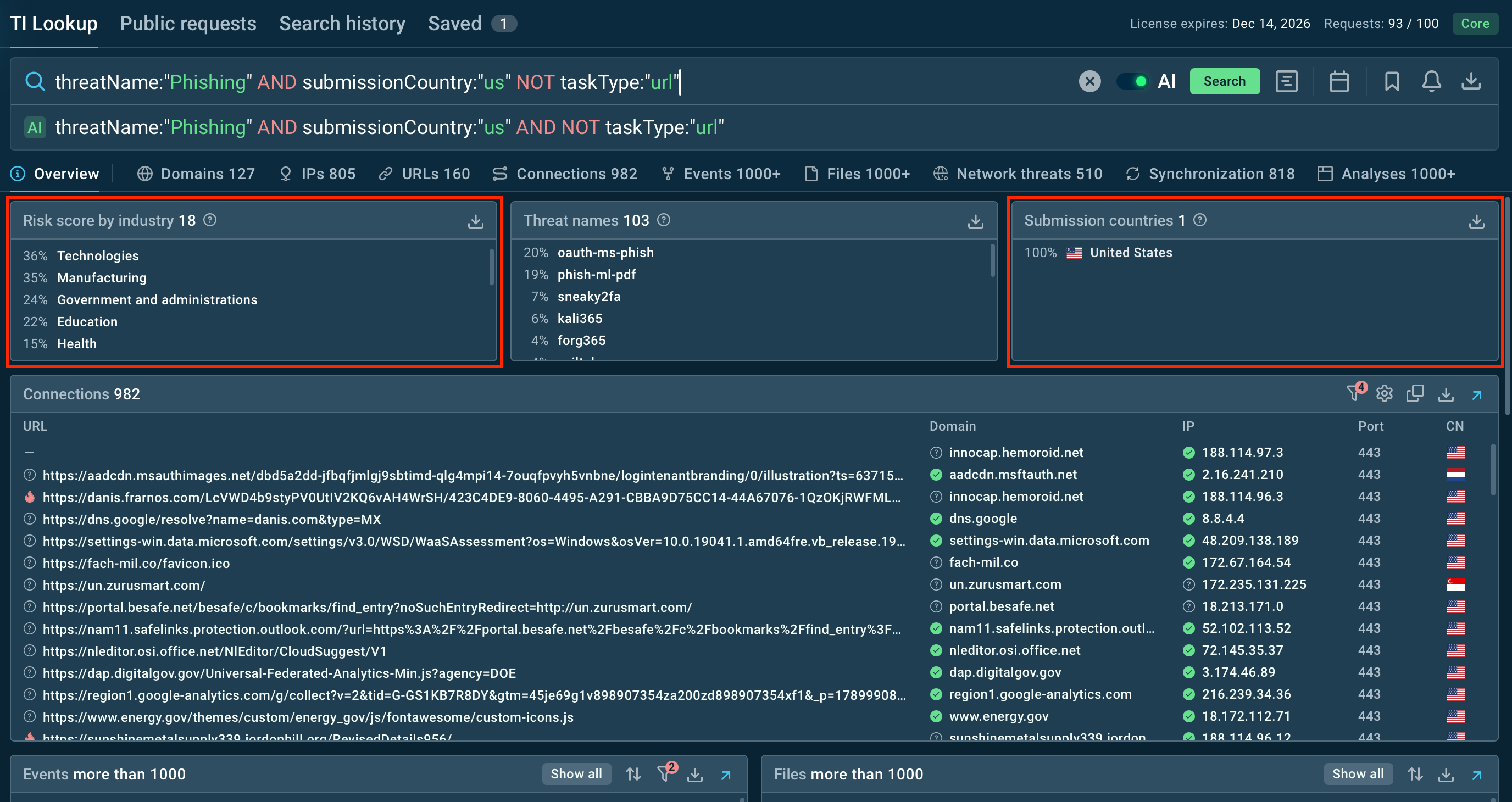
ANY.RUN’s Threat Intelligence Lookup gives analysts access to threat data built from activity observed across 16,000+ organizations and 700,000+ cybersecurity professionals. Analysts can use that context to connect indicators with related infrastructure, previous activity, and wider campaign patterns.
For MSSPs, this makes it easier to move beyond a single suspicious URL or domain and understand what is happening around the client’s sector: which threats are appearing, what infrastructure is active, and whether a case fits a broader pattern.
4. Bring Fresh Threat Intelligence into Detection
Threat intelligence has more value when it reaches the systems analysts already use.
ANY.RUN’s Threat Intelligence Feeds provide fresh, verified IOCs that can be integrated into SIEM, EDR, and other detection workflows.
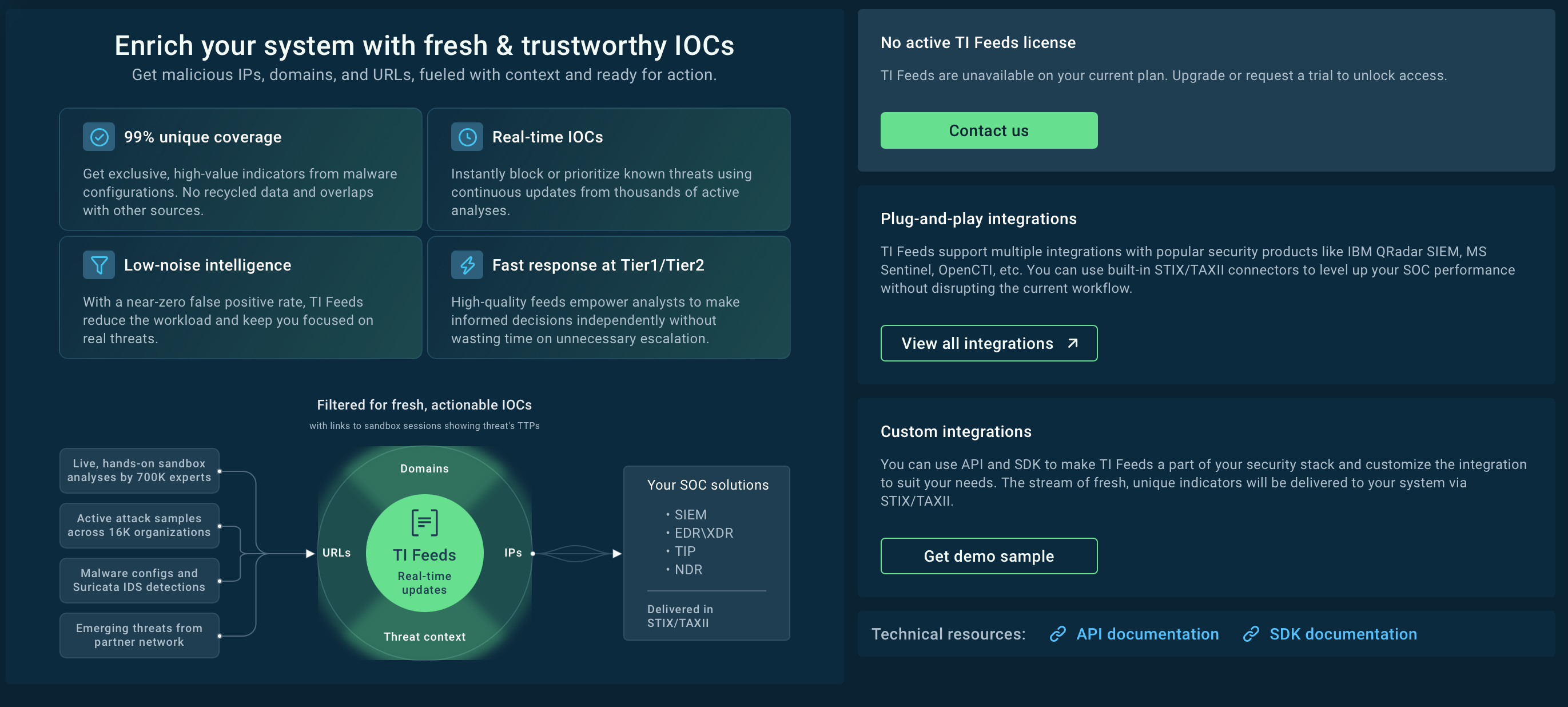
This gives Tier 1 more context earlier in the process. Known malicious infrastructure can be flagged sooner, alerts can be prioritized with current intelligence, and analysts spend less time researching indicators from scratch.
For MSSPs, that can make phishing triage more consistent across customer accounts and help teams spot related activity faster.
5. Give Tier 2 a Complete Handoff
When a phishing case does need escalation, Tier 2 should not have to repeat the same investigation from the beginning.
ANY.RUN’s Tier 1 reports bring together the key findings from the analysis, including the verdict, observed behavior, indicators, and recommended next steps. AI-generated summaries and recommendations help analysts quickly understand what happened and what deserves attention.
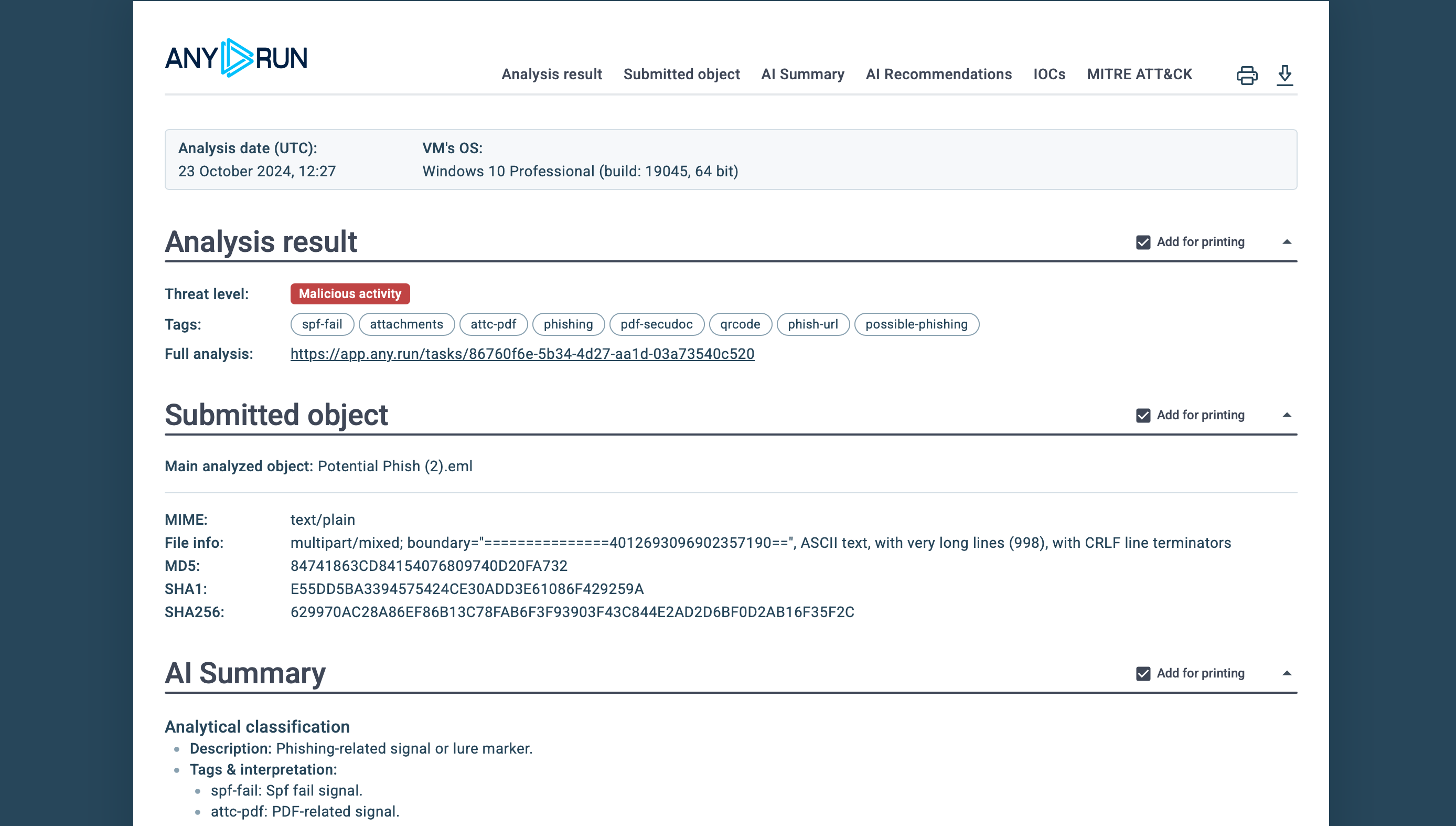
That gives senior analysts a much clearer starting point. Instead of reopening the case, retracing the attack chain, and rebuilding the context, they can focus on the part that actually needs deeper investigation.
This reduces duplicated work and keeps senior analyst time focused on the cases that really need it.
Resolve More Phishing Without Adding More Pressure to the SOC
Faster phishing triage is not just about closing alerts sooner. It is about making better use of the analyst capacity already available.
When Tier 1 has enough visibility, threat context, and structured reporting, more cases can be resolved without unnecessary escalation. Tier 2 stays focused on complex investigations, while the SOC can handle more customer activity without adding the same amount of analyst overhead.
That means more cases resolved, fewer wasted handoffs, and more room to scale the service.
ANY.RUN brings interactive analysis, threat intelligence, fresh IOCs, and reporting into the same workflow to help teams get there.


