




Press play to start listening
Cato Networks researchers investigating malicious Google ads found fake downloads for Codex, Claude Code and Homebrew in malicious sponsored search results appearing under the verified identities of legitimate businesses with no apparent connection to the software.
In research shared with Hackread.com, Cato researchers noted capturing a fake Codex ad under the profile of a health and nutrition business that also advertised the company’s own products. The Codex ad also contained wording from its health-related promotions. “A mismatch in the ads stood out,” Cato Networks noted in the blog post.
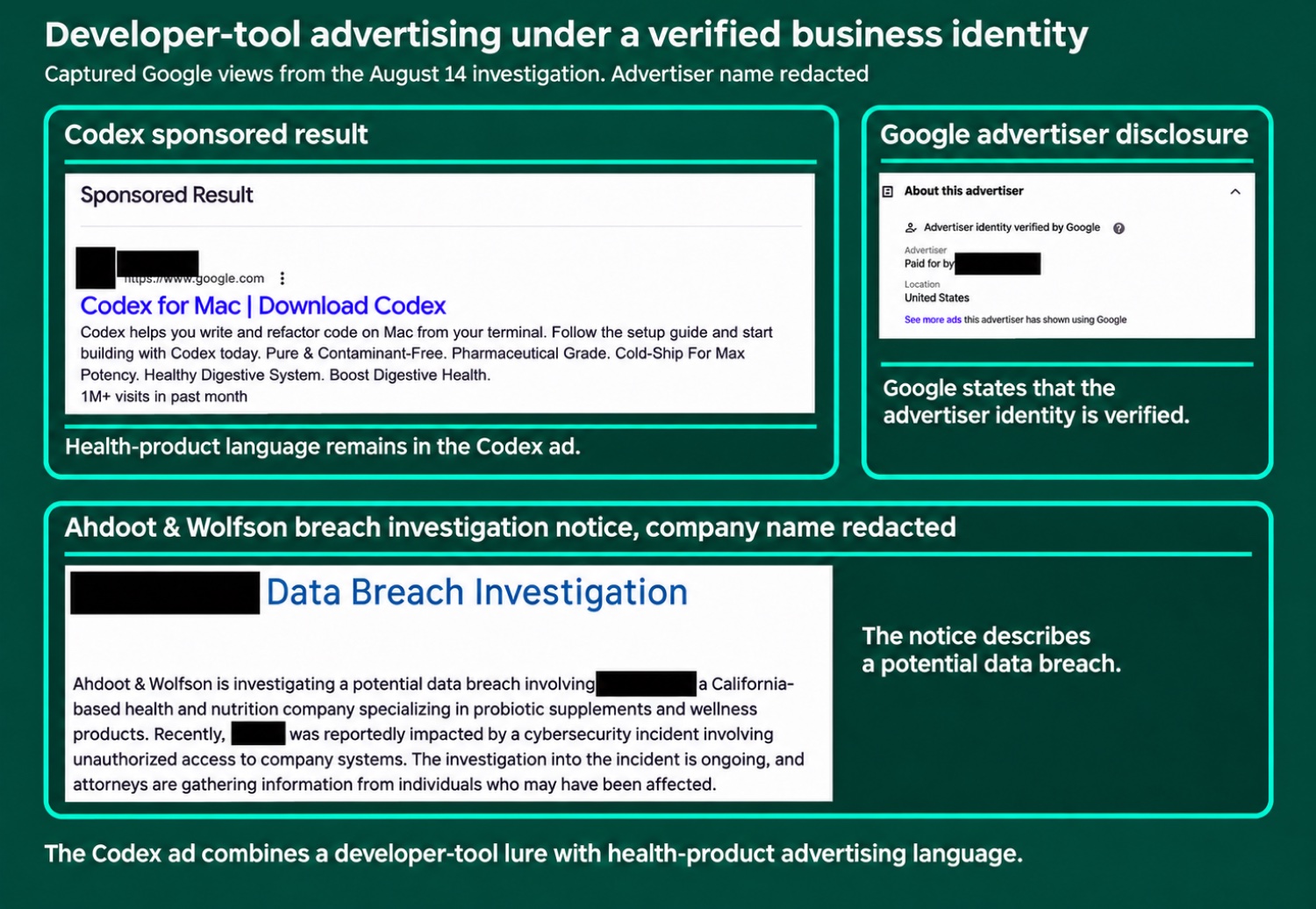
Cato believes the attackers either phished the advertisers’ Google Ads accounts or misused their identities for running this campaign, which means the firm “may also be a victim.”
Researchers followed a Google ad shown for the search “claude code mac download” and found that it eventually led to a ClickFix attack (in which a user is tricked into running a malicious command and gets the device infected).
In that case, the search generated ads that redirected visitors to parentpreneurxcom, where they were asked to copy a command into macOS Terminal to install the software.
Interestingly, this redirect didn’t show everyone the same page. Through traffic cloaking, some visitors received the fake installer and some were shown harmless content, which was probably done to evade detection. Similar Google redirects led to fake Homebrew sites homebrexwin.com and storageprofiler.com too.
Cato found some of the fake Claude and Codex websites using the same domains. Basequill9.com, for example, appeared in both Claude and Codex download chains. Stride25.com was used in another pair of sites, while two Codex pages shared Plume-compass.com.
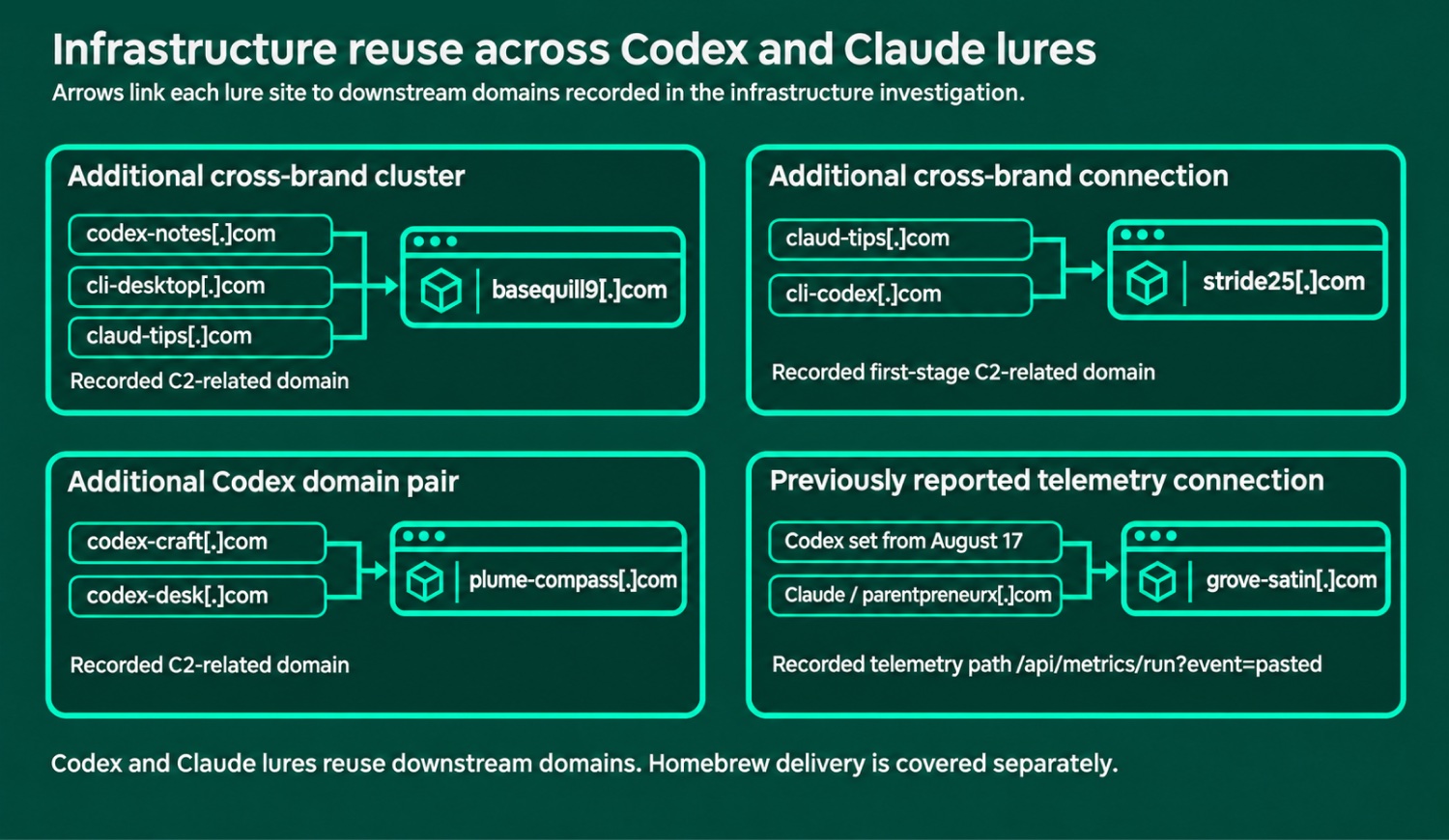
The fake Claude installer used a hidden web address to fetch a script from vine-96.com. Once run through macOS’s zsh shell, the script downloaded a file called helper onto the Mac and sent activity data to grove-satin.com. Cato found similarities between this process and an Atomic macOS Stealer (AMOS) infection method, but could not confirm that all the malware in the campaign was AMOS.
There were other tricks too. A fake Codex download used a TALLY app as a decoy. A malicious disk image contained an app called DayNote, which retrieved further instructions from GitHub through jsDelivr. In a separate Claude attack, JavaScript for Automation (JXA) was used to download malware disguised as Finder.app. Cato could not establish whether the people behind these attacks were connected.
Cato started notifying service providers on November 6, 2026. Cloudflare confirmed that it had restricted access to reported URLs. By November 11, the GitHub repository and jsDelivr resource examined by the researchers were no longer available.
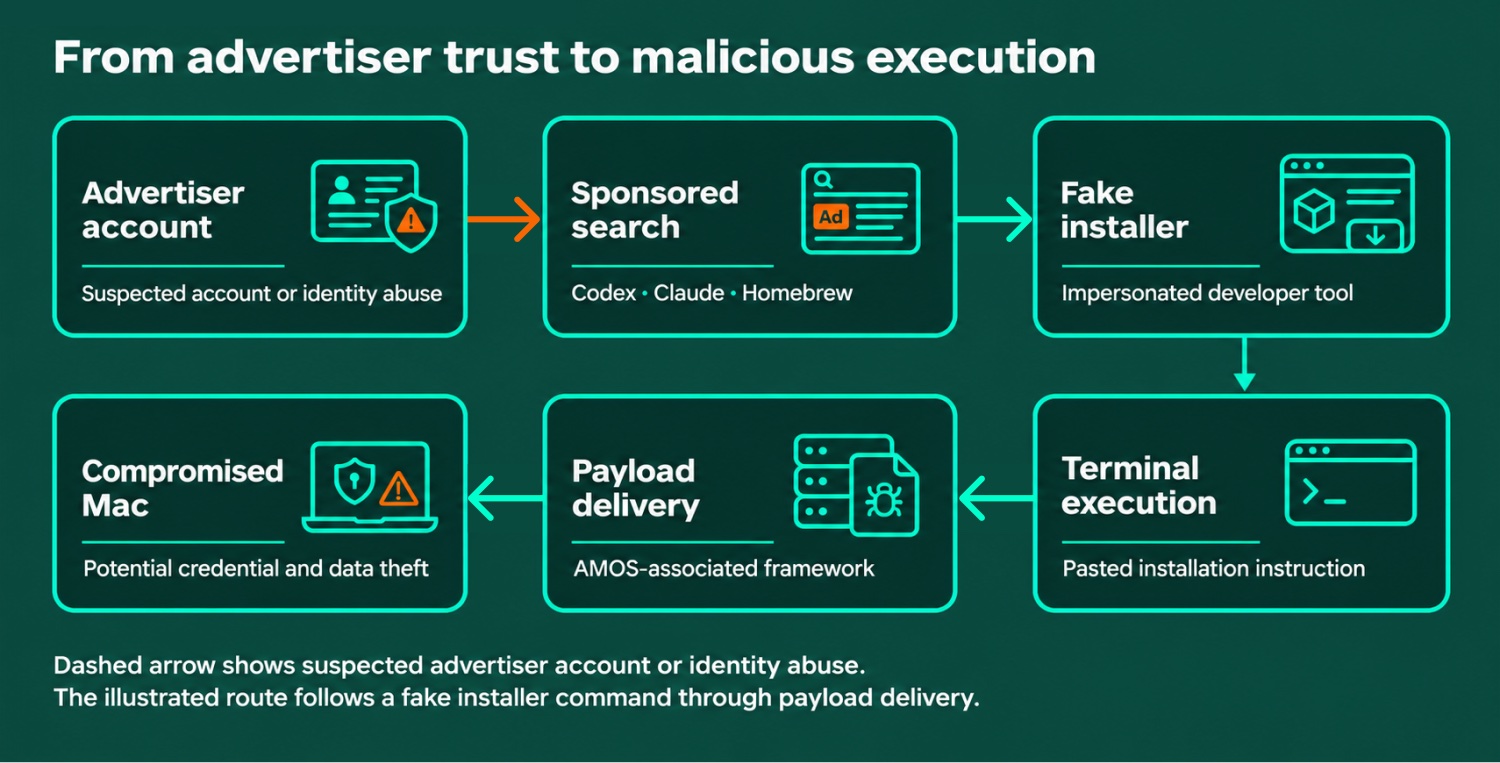
The campaign shows how easily a routine software search can lead users to a malicious download. In these cases, the attackers did not need to find a way around macOS security. They relied on users following installation instructions and running commands themselves.