





Press play to start listening
Disclosure: This article was provided by ANY.RUN. The information and analysis presented are based on their research and findings.
ANY.RUN’s threat research team has uncovered a highly sophisticated and resilient malware operation known as PhantomEnigma, which specifically targets banking and public-sector organizations. By leveraging compromised .gov.br portals and authentic email channels, the operation effectively bypasses traditional reputation-based security controls, posing a severe threat to organizations that rely on domain trust to verify incoming communications.
How PhantomEnigma Uses Government Sites to Distribute Malware
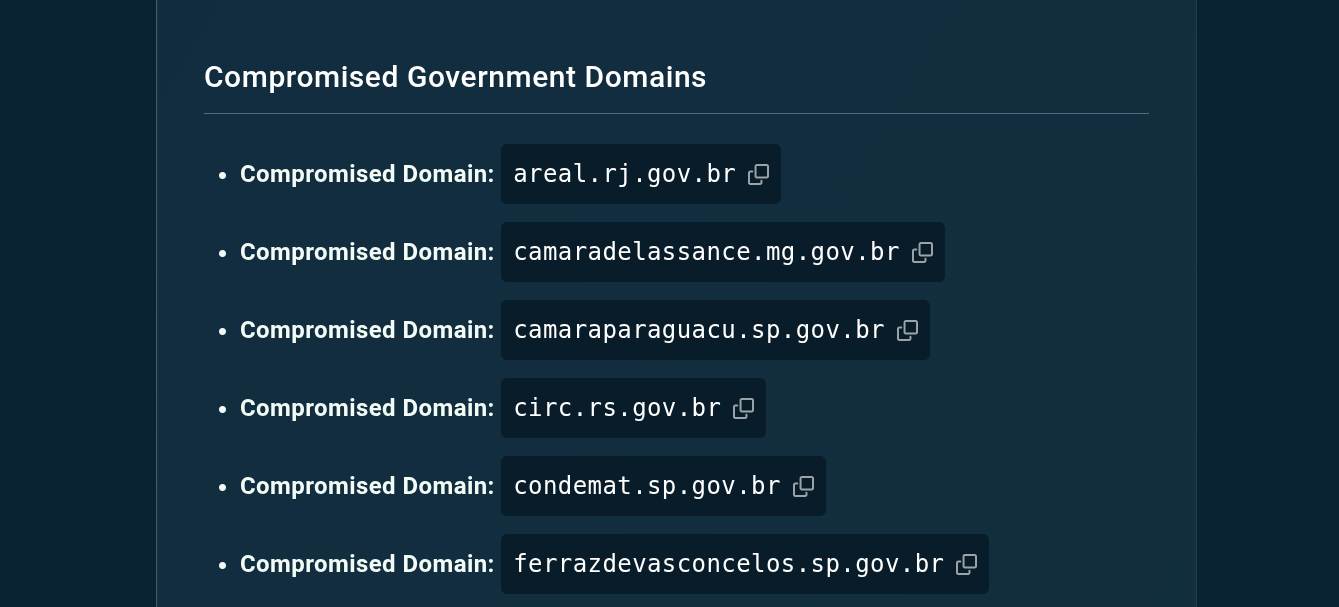
The core of the PhantomEnigma strategy is the systemic abuse of at least 20 legitimate Brazilian government portals (The full list is available in ANY.RUN’s TI Reports), including municipal and police websites.
The attackers hijack these official platforms to host malicious files and manage redirect chains, ensuring that every link sent to a victim carries the weight of a trusted domain.including municipal and police websites. The attackers hijack these official platforms to host malicious files and manage redirect chains, ensuring that every link sent to a victim carries the weight of a trusted domain.
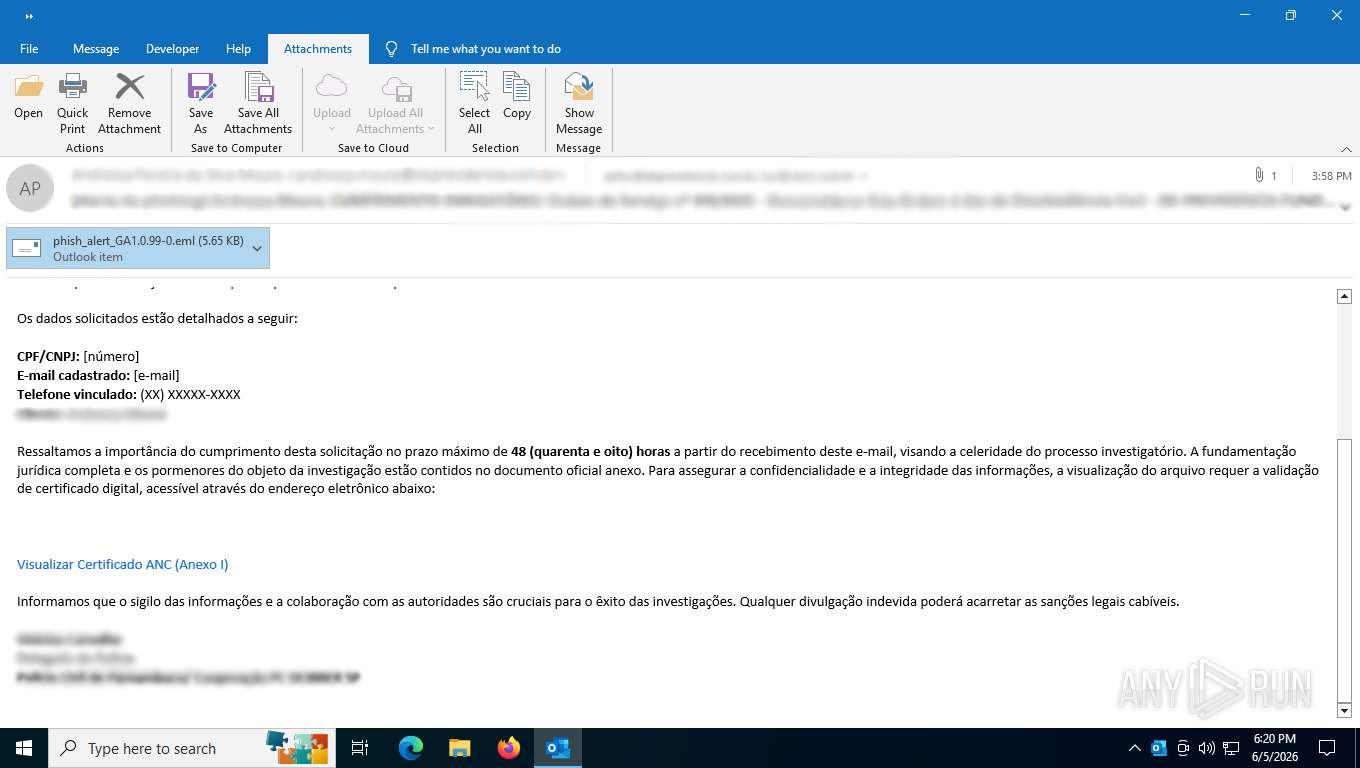
The attack typically begins with a phishing email sent through compromised official mailboxes, allowing the messages to pass critical security checks such as SPF, DKIM, and DMARC. These emails use high-pressure law enforcement themes, such as fake “Ofício” (official summons) PDF documents or “Procuração Digital” (digital power of attorney) lures.

Because the links point to genuine government hosts, the malicious activity is difficult to distinguish from normal traffic, providing the “phantom” operation with a highly effective and trusted delivery channel.
Why Businesses Are at Risk of PhantomEnigma
The PhantomEnigma campaign represents far more than a technical anomaly; it is a direct threat to an organization’s bottom line. For security leaders, the risks are defined by both immediate financial loss and long-term operational damage.
- High-Stakes Financial Exposure: Phishing remains the primary entry point for 16% of all global breaches, with the average cost of a successful compromise reaching $4.8 million. Because PhantomEnigma specifically targets banking credentials, including those of major institutions like Banco do Brasi, the potential for direct fraudulent transactions is high.
- Operational and Reputational Disruption: A successful backdoor infection allows attackers to execute commands, collect sensitive system information, and deliver additional payloads such as loaders or stealers. This can lead to critical system downtime, regulatory penalties, and a total loss of customer and partner trust.
How the Typical PhantomEnigma Attack Unfolds
Using ANY.RUN’s Interactive Sandbox, analysts unmasked the multi-stage execution chain behind the “phantom” infrastructure that often bypasses automated scanners:
Victims follow links from spoofed emails, often appearing to come from genuine government mailboxes, to compromised .gov.br portals or lookalike domains.
These sites deliver a Delphi-compiled installer (e.g., Procuracao_Digital.exe) that silently unpacks a patched Electron application.
Once launched, a malicious index.js script self-deobfuscates to steal system data, establish persistence via registry keys, and connect to a command-and-control (C2) server.
The backdoor provides a “task-execute” loop where the server can push second-stage files, such as stealers or remote access tools, for final execution.
While attackers frequently change lures and file names, their underlying build characteristics remain stable. By utilizing ANY.RUN Threat Intelligence Lookup, analysts successfully pivoted from a single suspicious file to a massive campaign cluster.
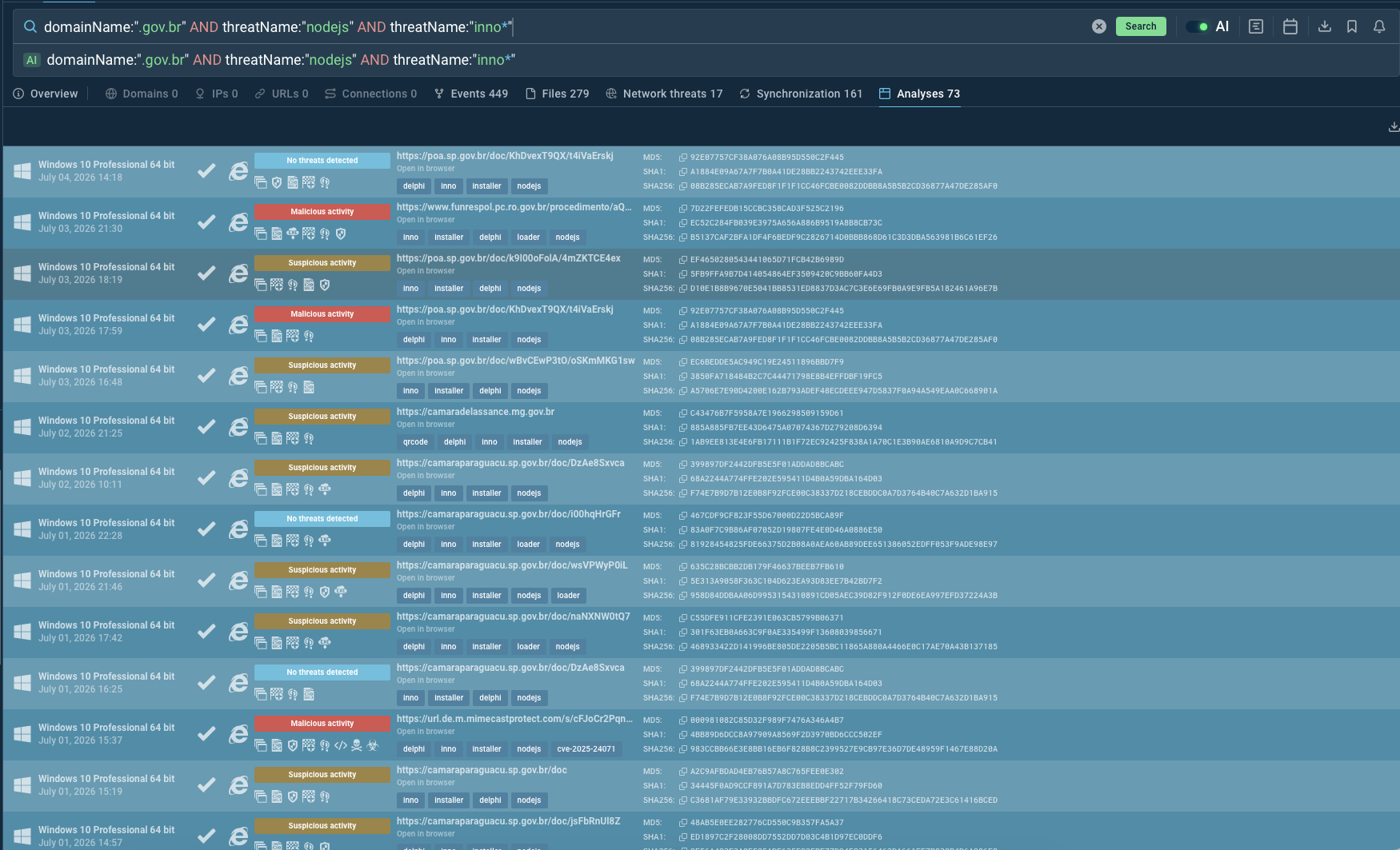
By searching for the operation’s unique “build-chain” fingerprint, the specific combination of Delphi, Inno Setup, and Node.js, investigators identified 231 related sandbox sessions.
This cross-correlation allowed the SOC to link separate attack arms, such as the “Ofício-PC” QR-code campaign, back to the same coordinated PhantomEnigma operation. This level of visibility ensures that even when a lure changes, the threat remains identified.
| Stop missed attacks in your SOC with deep alert context. Integrate ANY.RUN to get instant threat reports on any file, URL, or IOC within seconds. Request access for your team. |
How to Detect and Block PhantomEnigma Early
Because PhantomEnigma rotates its command-and-control (C2) infrastructure almost weekly, relying on static blacklists is a losing strategy. To achieve proactive immunity, SOC teams must move from manual identification to an automated, intelligence-driven defense.
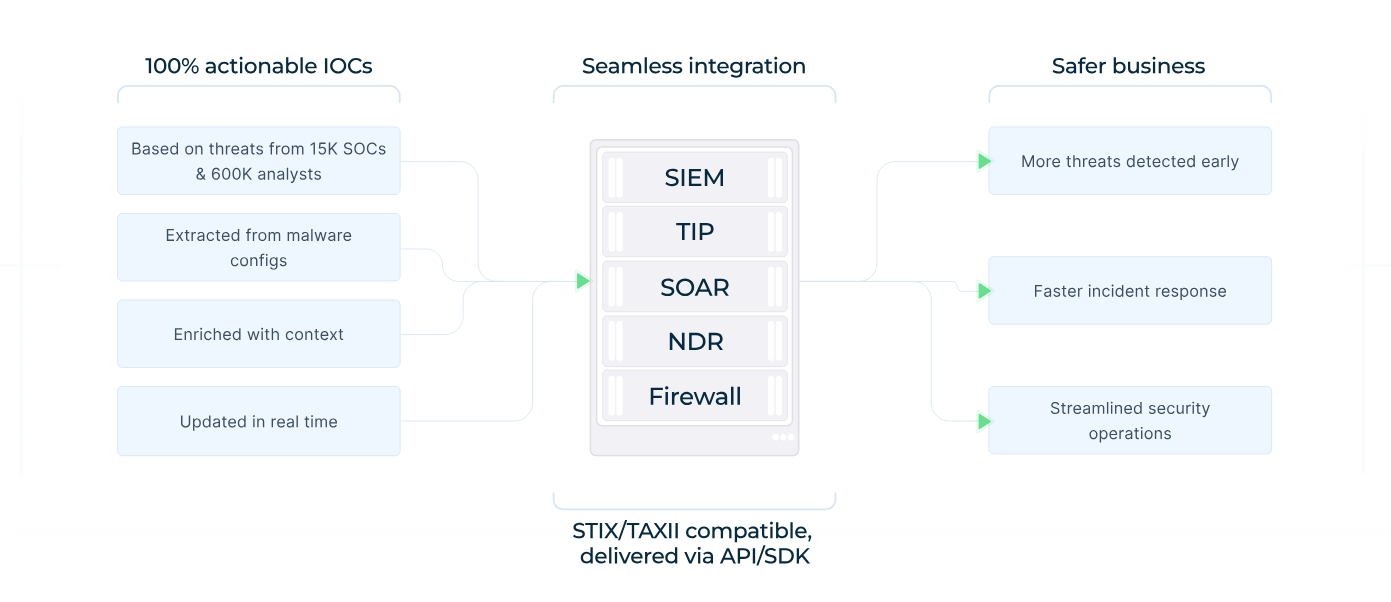
ANY.RUN’s Threat Intelligence Feeds provide the high-fidelity telemetry needed to stay ahead of these rotations. Instead of waiting for a local user to click a link, your security stack (SIEM, EDR, or OpenCTI) is updated with a real-time stream of malicious IPs, domains, and URLs.
- Verified by Global Activity: These TI Feeds are curated indicators derived from confirmed malicious activity observed by 15,000 organizations and 600,000 analysts within the ANY.RUN ecosystem.
- Neutralizing the Entry Point: By integrating these feeds, your SOC can block newly compromised government hosts and rotating C2 domains hours before they target your specific environment.
- Operational Scale: Automating the ingestion of these IOCs allows your team to skip the triage phase entirely for known PhantomEnigma campaigns, focusing their energy on hunting for undocumented variants using the platform’s YARA and build-chain search capabilities.
| Reduce risk of a phishing incident. Block the latest attacks proactively with IOCs gathered across real threat investigations across 15K companies. Get access to ANY.RUN |
Conclusions
The emergence of PhantomEnigma marks a dangerous evolution in the phishing landscape, where the misuse of trusted government infrastructure and modular backdoors renders traditional security controls ineffective. As attackers continue to professionalize their delivery chains and rotate infrastructure at high speeds, SOC leaders must adopt a behavior-first security model.
(Photo by Ed Hardie on Unsplash)