





Press play to start listening
Cybersecurity researchers at Intruder took control of five US Treasury subdomains for about $3 each by claiming Amazon Web Services (AWS) IP addresses that the subdomains still pointed to.
The researchers demonstrated that they could publish their own content on the affected addresses. Intruder did not report access to Treasury’s internal systems or theft of government data.
How old DNS records left the subdomains exposed
When an organisation retires a cloud server, its DNS records can still direct visitors to the server’s old IP address. If the cloud provider assigns that address to another customer, the new holder can serve content under the original subdomain. That leftover entry is known as a dangling DNS record.
In its research report, shared with Hackread.com, Intruder said it tested whether AWS Elastic IP addresses matched live DNS records. Over 48 hours, the researchers checked about 450,000 unique IP addresses and found 28 matches. Nearly half belonged to government organisations.
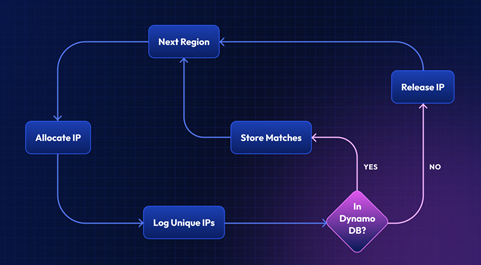
Five US Treasury subdomains pointed to addresses Intruder controlled:
ftp.treasury.govpcp.treasury.govww5.treasury.govrdgw.treasury.govirssearch.treasury.gov
Someone who gains control of a government subdomain could host a phishing page on a genuine .gov address and obtain a valid HTTPS certificate. Intruder also warned that older automated systems could still send credentials to a retired address, and that cookies configured to be shared with subdomains could be exposed. The report described these as risks and did not document credential or cookie theft.
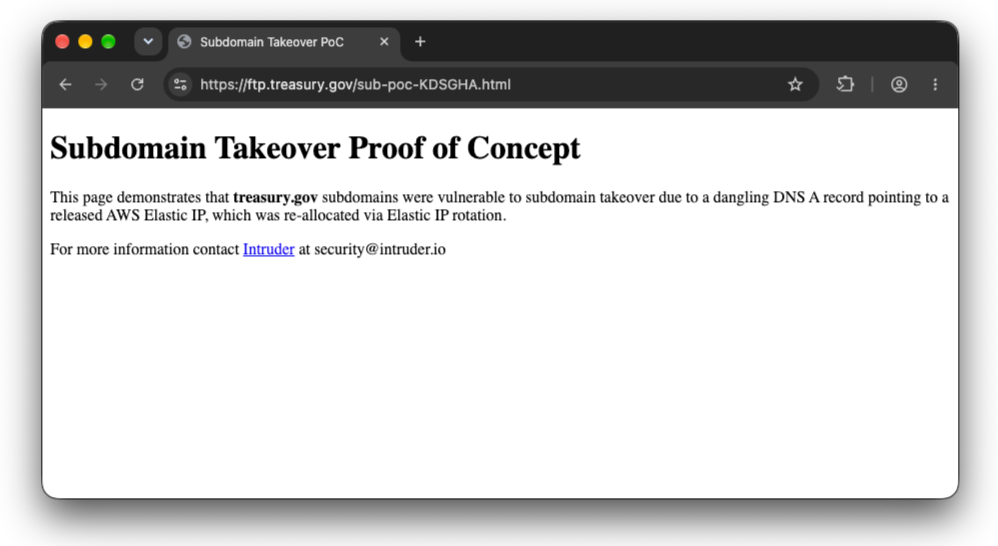
ftp.treasury.gov after taking control of the AWS IP address whose DNS record it still pointed to. (Source: Intruder)AWS says customers are responsible for removing old DNS records
AWS blocked Intruder’s account from claiming or using Elastic IP addresses after 48 hours of testing. The researchers said they were still able to transfer addresses they had already claimed to another account within the same AWS organisation.
Intruder asked AWS to limit monthly IP allocations and apply restrictions to entire organisations. According to Intruder, AWS said on November 17 that it had no plans to make those changes and maintained that customers were responsible for removing obsolete DNS records.
Intruder said it notified the organisations affected by all 28 findings and that the DNS records were fixed. Its test covered 0.56% of AWS’s published EC2 IPv4 address space. For organisations retiring cloud services, the practical step is to remove or update the DNS records before releasing the addresses they point to.