



Press play to start listening
Borrowing against XRP allows cryptocurrency holders to access funds without selling their assets. However, loan-to-value (LTV) limits, interest rates, collateral storage arrangements, and repayment conditions vary considerably between lenders.
Some platforms offer higher borrowing limits and faster access to funds, while others focus on third-party custody, established credit accounts, or decentralised lending protocols. Comparing these differences matters, especially because XRP price movements can affect collateral requirements and trigger liquidation.
The 4 Best XRP Lending Platforms: Quick List
- CoinRabbit: crypto loans with up to 90% starting LTV, issued within 10 minutes, with minimums from $25 depending on the asset.
- Arch: Up to 45% starting LTV, third-party custody through Anchorage Digital, and a $25,000 minimum loan.
- Nexo: XRP-backed credit lines with up to 30% LTV and interest rates determined by region and loyalty tier.
- Coinbase: Onchain XRP-backed loans through Morpho, with borrowing of up to $100,000 in USDC.
Understanding XRP-Backed Loans
XRP-backed lending allows holders to use their cryptocurrency as collateral to obtain cash or stablecoins. Instead of selling XRP, borrowers deposit it with a lending service or into a supported lending protocol and receive funds based on the collateral’s market value.
The amount available depends largely on the loan-to-value ratio. For example, a 50% LTV allows a borrower to receive $5,000 against $10,000 worth of XRP. Higher LTV ratios provide access to more funds but leave less room for price declines before borrowers must add collateral or repay.
XRP holders also face fewer lending options compared with Bitcoin and Ethereum holders, making it important to examine each provider’s terms rather than relying on advertised interest rates alone.
Research Scope and Method
This comparison examines four platforms offering XRP-backed borrowing, using five criteria: collateral security, starting LTV, funding speed, minimum loan requirements, and interest rate structure.
The figures are based on publicly stated platform terms as of November 2026. They should be treated as advertised conditions rather than independently verified performance guarantees. Rates, asset eligibility, and borrowing limits can also vary by jurisdiction and account status. To illustrate how borrowing limits differ, the comparison uses a hypothetical holder with $100,000 worth of XRP.
Key Findings
- Borrowing limits differ substantially. Advertised maximum starting LTVs range from 30% to 90%, giving borrowers very different levels of access to funds.
- Minimum loan amounts vary. Some services accommodate relatively small loans, while others require collateral sufficient to support borrowing of at least $25,000.
- Interest calculations are not uniform. Fixed-rate loans, daily compounding interest, and variable onchain borrowing rates make direct comparisons more complicated.
- Custody arrangements differ. Borrowers may encounter segregated cold storage, independent custodians, centralised platform accounts, or blockchain-based smart contracts.
- Liquidation remains a significant consideration. A high starting LTV reduces the amount XRP can decline before the loan becomes subject to additional collateral requirements or liquidation.
XRP Lending Platforms Compared
The following table summarises the published terms of the four services, presented in the same order as the Quick List.
| Feature | CoinRabbit | Arch | Nexo | Coinbase |
| Maximum starting XRP LTV | 90% | 45% | 30% | Not specified here |
| Loan against $100,000 XRP | Up to $90,000 | Up to $45,000 | Up to $30,000 | Depends on permitted initial LTV |
| Minimum loan | From $25, depending on asset | $25,000 | $50 stablecoin withdrawal | Depends on collateral and protocol terms |
| Funding speed | Within 10 minutes | Minutes after approval | Same day to 5 business days | USDC credited through the app |
| Collateral custody | Segregated cold multisig | Anchorage Digital | Centralised account | Morpho smart contracts |
| Interest rate model | Fixed, from 11.95% APR | Fixed, 8.50% to 13.50% APR | From 1.9%, subject to conditions | Variable |
| Notable feature | Higher borrowing LTV | Independent custodian | Flexible credit line | Onchain borrowing |
The maximum LTV figures do not represent equivalent risk levels. Borrowers must also consider liquidation thresholds, margin call procedures, fees, and whether additional collateral can be deposited during market declines.
Platform Profiles
CoinRabbit
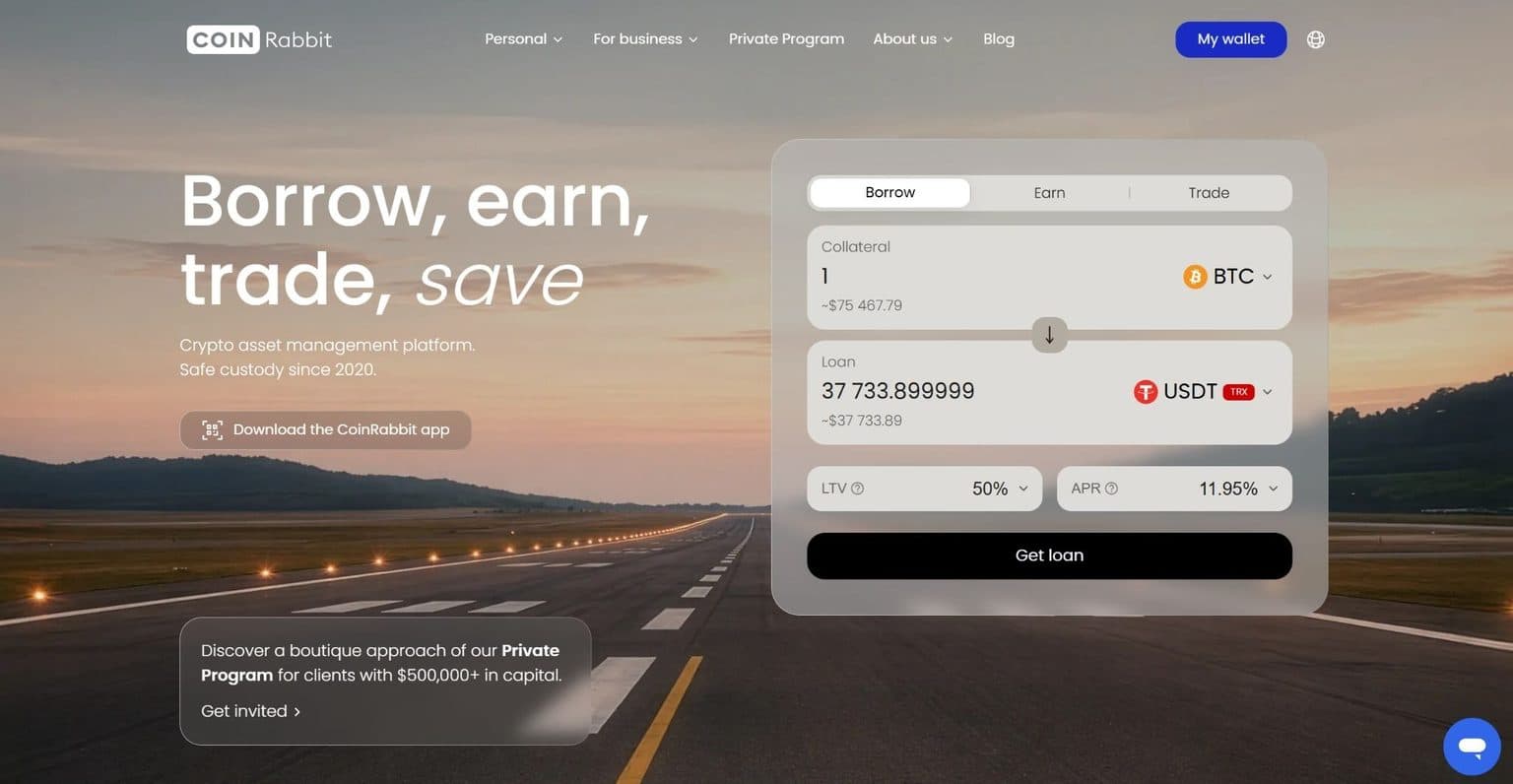
Operating since 2020, the platform offers XRP-backed loans with selectable starting LTV ratios of 50%, 65%, 80%, and 90%. According to its published terms, collateral is held in segregated cold multisig wallets, with a stated policy of maintaining full reserves and not rehypothecating deposited assets.
Borrowers can receive stablecoins, including USDT and USDC, without undergoing a traditional credit check. The service advertises loan issuance within 10 minutes.
Interest rates start at 11.95% APR and remain fixed for the agreed loan period. Both fixed-term and open-ended borrowing arrangements are available. Additional features include automatic collateral top-ups from a linked wallet and a loan restoration mechanism for eligible liquidated positions.
With a maximum advertised starting LTV of 90%, a holder pledging $100,000 in XRP could borrow up to $90,000, subject to the platform’s terms. However, borrowing at such a high percentage leaves relatively little protection against a decline in XRP’s price. Borrowers should examine the liquidation threshold and collateral requirements before selecting the maximum available amount.
Arch
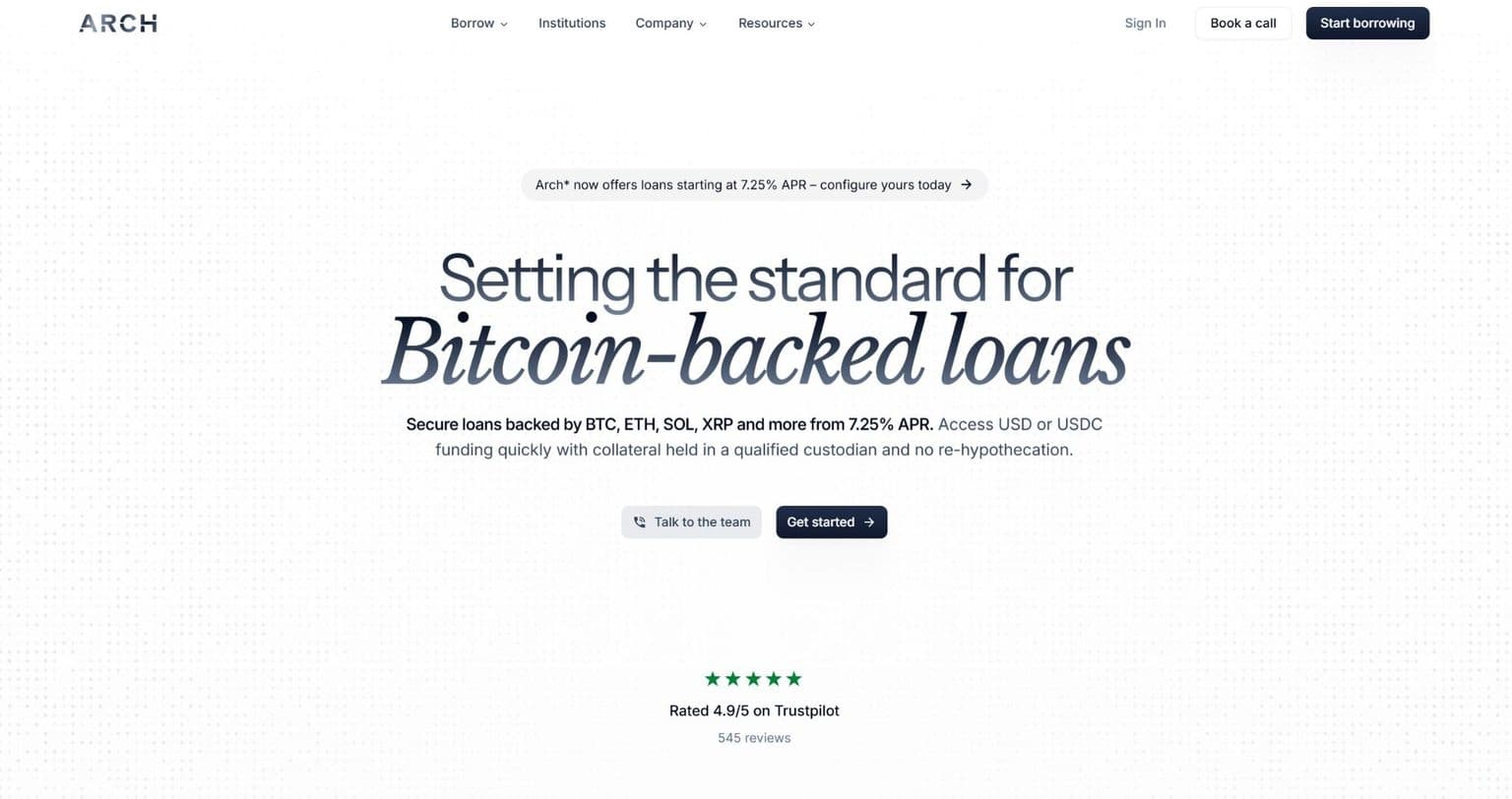
Arch focuses on larger cryptocurrency-backed loans and uses Anchorage Digital for collateral custody. The company states that pledged assets are held separately and are not rehypothecated.
XRP-backed loans begin at $25,000, with a maximum starting LTV of 45%. The platform specifies a margin call threshold of 55% LTV and a 24-hour period to address collateral shortfalls. Partial liquidation can occur at 65% LTV.
Pricing depends on the loan amount. Published rates range from 13.50% APR for loans between $25,000 and $500,000, including a 1.50% origination fee, to 8.50% APR for loans exceeding $5 million. Loan terms extend to 12 months, with identity verification and approval required before funding. Borrowers can receive funds through USD wire transfers or USDC.
For the $100,000 XRP example, the maximum initial loan would be $45,000. The relatively low starting LTV provides more room for collateral price declines than higher-LTV products, although borrowers must still monitor the stated margin call and liquidation levels.
Nexo
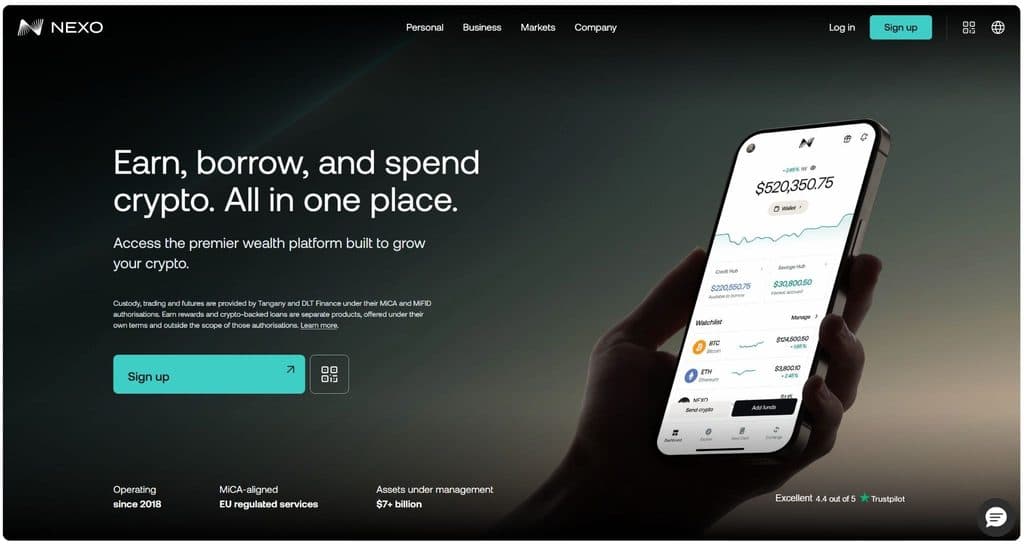
Nexo provides cryptocurrency-backed credit lines, allowing eligible customers to borrow against supported digital assets, including XRP. The platform lists a maximum XRP LTV of 30%, placing its borrowing limit below those of the first two lenders in this comparison.
Advertised interest rates begin at 1.9%, but eligibility depends on factors such as the borrower’s region and loyalty tier. Interest accrues daily and compounds, making the effective borrowing cost dependent on the applicable rate and repayment period. Borrowers can repay according to their own schedule, subject to the credit line’s conditions.
Stablecoin withdrawals begin at $50, while bank transfers require a minimum of $500. The platform lists daily withdrawal limits of up to $2 million, with funds arriving on the same business day or within five business days, depending on the payment method. A borrower providing $100,000 worth of XRP could access up to $30,000 at the published maximum LTV.
The service is particularly relevant to existing account holders seeking a credit line rather than a separate fixed-term loan. However, customers should review their applicable borrowing rate, interest calculation, and collateral requirements before proceeding.
Coinbase
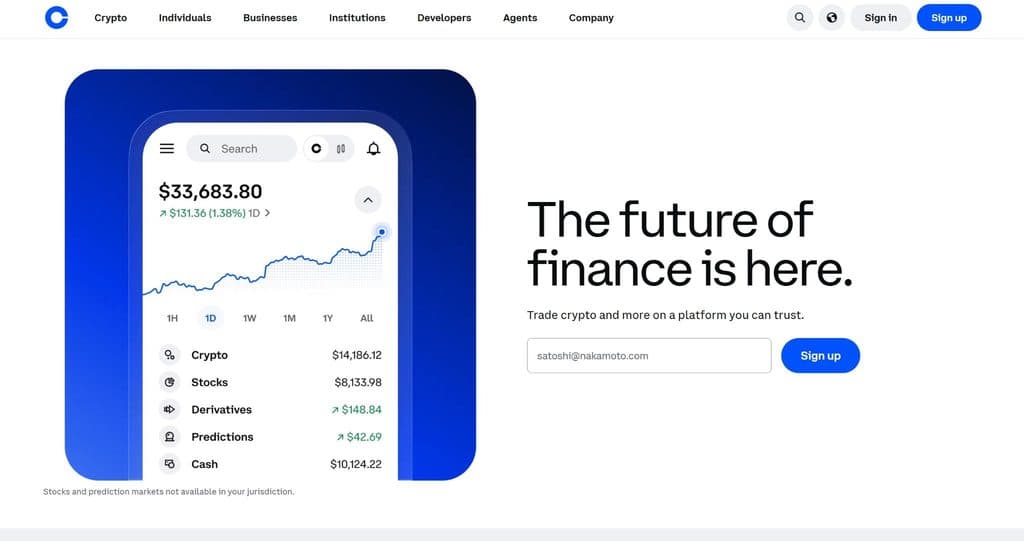
Coinbase supports XRP-backed borrowing through its integration with Morpho, a decentralised lending protocol. Unlike traditional lending arrangements, the collateral is managed through blockchain-based smart contracts, while borrowers receive USDC through the Coinbase application.
The platform lists a maximum XRP-backed borrowing amount of $100,000, with liquidation occurring when the position reaches 86% LTV. This 86% figure represents the liquidation threshold, not the maximum initial borrowing ratio. The actual amount available to a borrower depends on the lending market’s permitted starting LTV and other applicable restrictions.
Interest rates are variable and determined by conditions in the Morpho lending market. Borrowers can repay according to their preferred schedule, provided the position remains within the protocol’s collateral requirements.
The onchain arrangement offers a different custody model, but introduces smart contract, protocol, and variable-rate risks alongside XRP price volatility. Borrowers should review both the initial borrowing limit and the liquidation threshold before opening a position.
Which Crypto Lending Platforms Accept XRP?
Several centralised and decentralised lending services support XRP as collateral, although their borrowing arrangements differ. Centralised lenders generally manage collateral custody, credit approvals, and liquidation procedures through their own systems or external custodians. Decentralised lending protocols instead rely on smart contracts to hold collateral and enforce borrowing requirements.
Neither arrangement eliminates risk. Custodial lenders require borrowers to assess operational security, asset segregation, and counterparty exposure. Onchain loans introduce technical risks associated with smart contracts, blockchain infrastructure, and lending market conditions. The appropriate choice depends on the borrower’s desired loan size, tolerance for liquidation risk, and preference for custodial or onchain arrangements.
How to Borrow Against XRP
The general process for borrowing against XRP is similar across most lending services, although the details differ between providers.
- Compare borrowing terms. Examine the maximum starting LTV, interest rate, repayment requirements, fees, and liquidation conditions.
- Choose a loan amount. Select an amount that leaves sufficient collateral value to withstand XRP price fluctuations.
- Complete the required verification. Some lenders require identity checks, while others use wallet-based lending arrangements.
- Deposit XRP as collateral. Transfer assets to the lender’s designated address or approved smart contract.
- Receive the loan. Depending on the service, funds may be issued in stablecoins or transferred through a supported banking method.
- Repay the outstanding balance. Repayment of principal, interest, and applicable charges allows borrowers to recover their remaining collateral, subject to the platform’s conditions.
Before depositing cryptocurrency, borrowers should verify the receiving address, supported blockchain network, and withdrawal conditions. A transfer to an incorrect address or unsupported network can result in permanent loss of funds.
Why XRP Price Volatility Matters
The principal risk in XRP-backed borrowing is that the collateral’s value can decline while the outstanding debt remains unchanged. Consider a borrower who deposits $100,000 in XRP and receives a $70,000 loan. The starting LTV is 70%.
If the XRP collateral loses 20% of its value, its market value falls to $80,000. Assuming the outstanding loan remains $70,000, the LTV increases to 87.5%. That increase can trigger liquidation if the lender’s threshold has been exceeded, even though the borrower has not withdrawn additional funds.
Borrowers can reduce this risk by selecting a lower initial LTV, adding more collateral when permitted, or repaying part of the outstanding loan. Interest charges can also increase the effective LTV over time, particularly when interest compounds.
What the Comparison Means for XRP Holders
The four lending services address different borrowing requirements. For smaller loans, minimum borrowing amounts and funding times are important considerations. Someone seeking a relatively modest stablecoin loan may find a $25,000 minimum impractical, regardless of the interest rate.
Larger borrowers may place greater importance on custody arrangements, published interest schedules, and the treatment of collateral during market declines. Existing credit platform customers may prefer borrowing through an account they already use, while borrowers familiar with decentralised finance may choose smart contract-based lending.
However, the highest available LTV is not automatically the most favourable option. It allows more borrowing against the same collateral, but also reduces the protection available when XRP declines in value.
Interest rates require similar attention. An advertised starting rate may depend on eligibility conditions, account tiers, loan size, or other factors that affect the final cost. For borrowers comparing these services, the most useful approach is to calculate the total repayment cost, determine how much XRP can fall before liquidation, and understand who controls the pledged assets.
Conclusion
XRP-backed lending provides an alternative to selling cryptocurrency when holders need access to funds. However, the available products differ in borrowing limits, collateral custody, interest calculations, and liquidation procedures.
The comparison shows that higher LTV limits offer greater access to funds but also increase exposure to XRP price volatility. Lower-LTV products restrict borrowing capacity while providing more room for collateral values to decline.
Borrowers should therefore assess the full loan conditions rather than selecting a lender based on advertised rates or funding speed alone. The deciding factors are the amount borrowed, total cost, collateral security, and the consequences of a decline in XRP’s market value.
Disclaimer: This article is for informational purposes only and does not constitute financial or investment advice. Cryptocurrency-backed loans carry significant risks, including price volatility, margin calls, liquidation, and possible loss of collateral. Interest rates, lending terms, and platform availability may change. Readers should conduct their own research, review the lender’s terms and conditions, and consult a qualified financial adviser before making borrowing or investment decisions.