


Press play to start listening
The US Department of Justice (DoJ) has announced charges, convictions, sentences, extraditions and other legal actions against more than 800 defendants across 400 cases involving scams and online fraud since March. The cases cover a range of schemes, from cryptocurrency investment fraud and impersonation scams to fraudulent call centers.
Announced on November 24 in a press release, the action also involved overseas raids, extraditions and efforts to recover money stolen from victims. US authorities worked alongside law enforcement in more than 10 countries in this effort.
The crackdown follows President Trump’s March 6 Executive Order 14390, which directed federal agencies to intensify efforts against online fraud.
Scam compounds, stolen funds and forced labor
As part of the crackdown, the FBI is working to dismantle scam networks through Operation Blackout- its global initiative to identify and dismantle scam compounds and disrupt the criminal networks behind them. The bureau reportedly has restrained nearly $17 billion in illicit funds, seized more than 14,000 digital devices, and helped dismantle over 29 scam compounds across Asia, Africa, and the Middle East.
This is an important part of the crackdown because the operation helped free and repatriate more than 2,200 people who were trafficked into the compounds and forced to carry out scams. Hackread.com has reported on fraud operations that rely on people who themselves are victims of trafficking.
In April, an investigation linked a Cambodian scam compound to an Android banking trojan targeting users in 21 countries, showing that these facilities can support more than just online investment fraud.
US agencies tackle fraud at home
Several agencies reported their own enforcement results. Homeland Security Investigations made more than 300 arrests and reported over $120 million in illicit proceeds seized, restrained, frozen or recovered. The Secret Service, meanwhile, restrained more than $200 million in illicit funds, disrupted 1,780 scam-related domains and investigated over 1,540 business email compromise incidents.
The Securities and Exchange Commission also filed actions against 39 entities accused of using false adviser registration filings to appear legitimate and attract investors. Meanwhile, the Federal Communications Commission approved prison phone-jamming rules to deal with scams carried out via smuggled mobile phones.
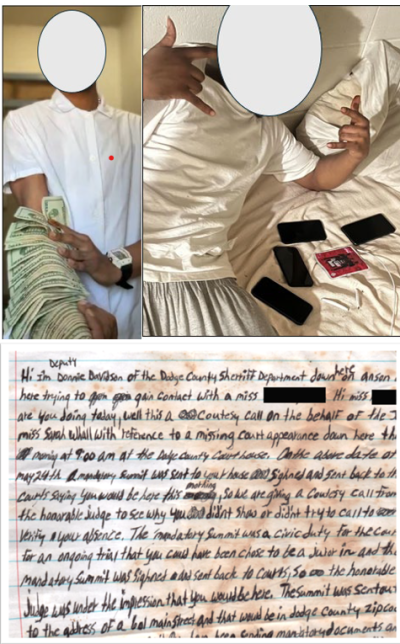
In Georgia, inmates allegedly used contraband phones to impersonate court officials, telling victims into that they had missed jury duty and faced arrest unless they paid a fake fine. Fourteen people were charged in these schemes, while another 17 faced charges related to smuggling phones into prisons.
The cases show how scammers keep exploiting everything from online platforms and investment schemes to phone calls. Despite the crackdown, the scale of the problem remains high, with Gallup estimating Americans lost $68 billion to scams in 2025 and 10% of US adults experiencing a scam directly or through someone in their household.
Expert’s Commentary
Dave Hayes, Vice President of Product at cybersecurity company FusionAuth, shared his thoughts with Hackread.com on why fraudsters can bypass bank security checks by manipulating victims into making payments themselves, and what banks could do to spot suspicious transactions.
“In most of the scams in this crackdown, the bank checked the right person, because the victim logged in on their own phone and sent the money themselves. Nobody checked the caller who was posing as a court or a bank and telling them to do it. The scammer has no authority over the account, so they work through the one person who does.
“When we decide whether to trust a login, a new device is usually just a new phone, but a new device an hour after a password change is a reason to ask for more proof. A phone call can be checked the same way. Watch for a number you don’t know, pressure to pay today, a request to move money somewhere new, and a story that can’t be true, like a court that takes fines at a crypto kiosk.”
“If two of those show up on one call, hang up and call them back on a number you look up yourself. Banks should run that check on the payment, even after the login passes. A first transfer to a crypto exchange, for more than the customer has ever sent anywhere, should be held until the bank has spoken to them.”