




Press play to start listening
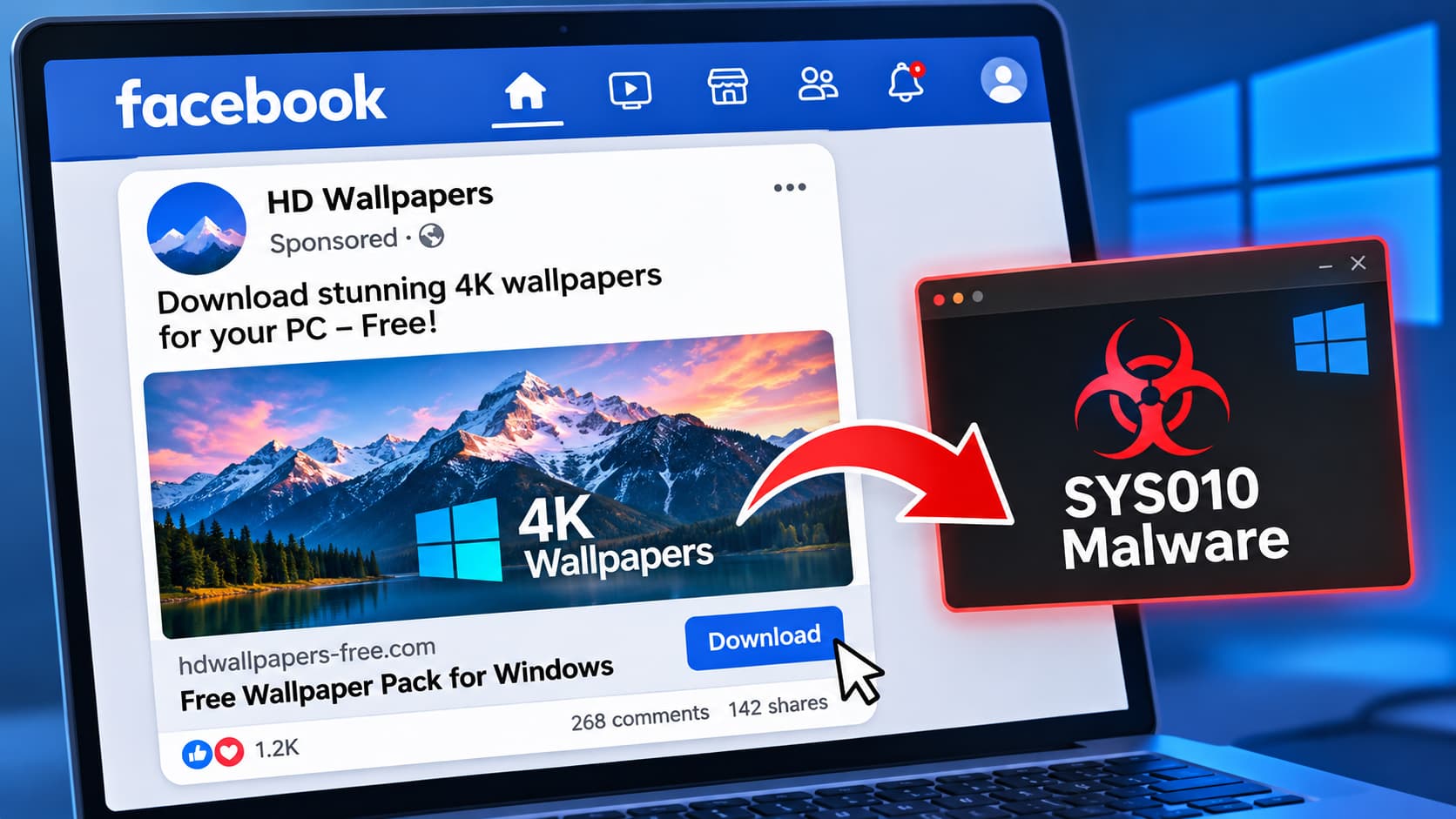
Fake animated wallpaper ads on Facebook are being used to spread malware that targets Meta business accounts, steals browser cookies and emails, in a campaign that has changed considerably from an earlier version tracked by Bitdefender.
The campaign was discovered by Bitdefender and named SYS010. In its research, shared with Hackread.com, Bitdefender researchers noted that SYS010 involves impersonating wallpaper software like Wallpaper Engine and Live Wallpapers and sending users to fake download sites where they are offered a ZIP file containing a seemingly legitimate Windows application.
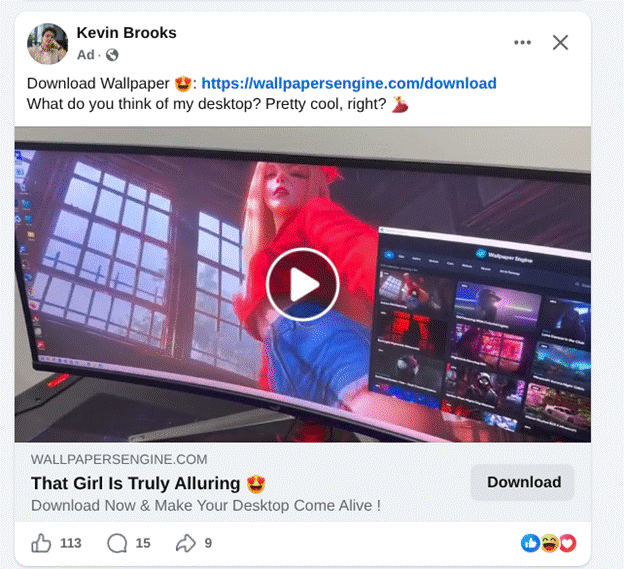
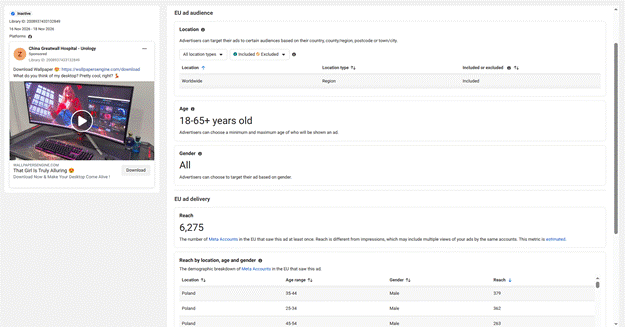
Bitdefender first discovered a malicious SYS010 ad on October 16, 2026, and its telemetry has since picked up infected-device requests from Asia, Europe, North America, Africa and South America. The Philippines, Thailand, Bangladesh, Poland, Mexico, Algeria, Belgium, Mongolia and the United States generated the most observed traffic, whereas Pakistan was also among the countries where activity was observed.
This is not the first time Bitdefender has reported on malware being pushed through Meta ads. In October, Hackread.com reported Bitdefender’s analysis on the SYS01 campaign impersonating software, including CapCut and Office 365, in which attackers used Electron applications and a large number of malicious domains to distribute the infostealer. SYS010 is a continuation of that operation, but the way it infects computers and steals information has considerably changed.
The downloaded application is a renamed, digitally signed MeisterTask program that actually opens and works as a wallpaper browser but contains hidden scripts that unpack another archive containing the malware.
The malware doesn’t start stealing data right away but first contacts a C2 server controlled by the attackers. The infected computer registers with the server, which decides whether to send it more malware. This lets attackers choose which computers to target without leaving that decision to the malware running on the victim’s machine.
The malware then takes control of browser settings to force-install extensions chosen by the attackers, but what’s interesting here is that it does this differently for each browser. Researchers explain that Chrome is linked to an attacker-controlled Google admin console while Firefox is given installation policies that also disable some of its controls, and Edge can be enrolled into a Windows management system. If a victim refuses administrator access, the malware keeps prompting them sometimes every three seconds.
After installation, the extensions can perform many different tasks like stealing browser cookies and using active Facebook sessions to gather information about business Pages, Business Managers, advertising accounts, spending and payment details. Reusing stolen session cookies can also allow attackers to access accounts without needing to go through the usual login and two-factor authentication process again.
The Chrome extension can also access Gmail and Outlook. It can collect up to 50 recent emails, including messages in spam folders, upload their contents to the attackers and delete selected messages. This additional access gives attackers a way to remove password reset emails, login codes and security alerts while hijacking accounts without alerting the victim.
The combination of browser control and email access also gives attackers a way to hide what they are doing. They can remove login alerts, verification codes and password reset emails after taking over accounts, which can delay discovery while they continue accessing victims’ Meta business accounts.


